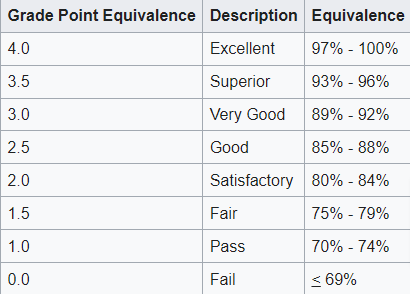
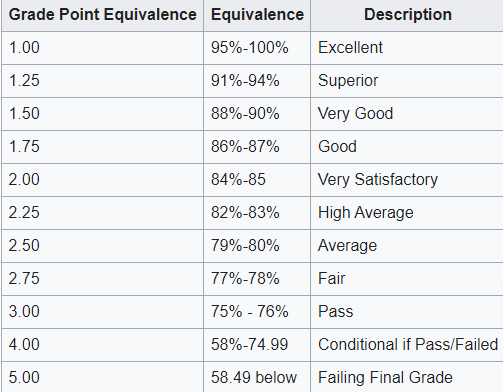
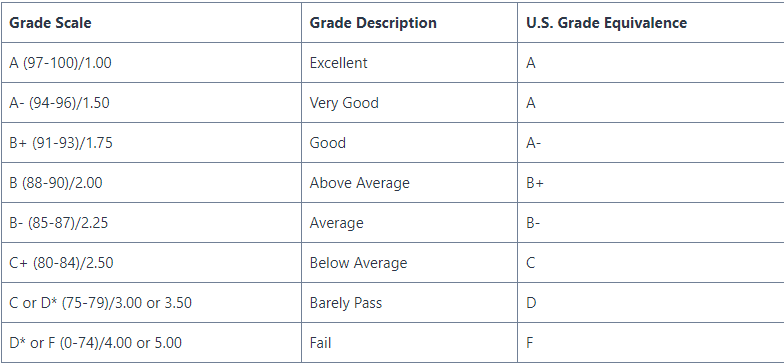
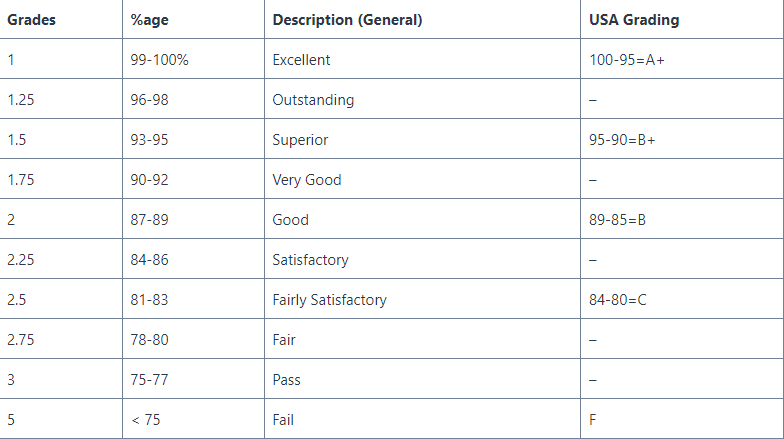
Why should we Use GWA Calculator? Here are the Reasons Choosing GWA Calculator

Linkhouse

In today’s fast-paced world, efficiency and accuracy are paramount, especially when calculating grades. The GWA Calculator is a powerful tool designed to make the process seamless, ensuring students and professionals can compute their Grade Weighted Average (GWA) quickly and without errors.

In this article, we’ll delve into why the GWA Calculator is an indispensable tool and how it meets various needs efficiently.

GWA Calculator

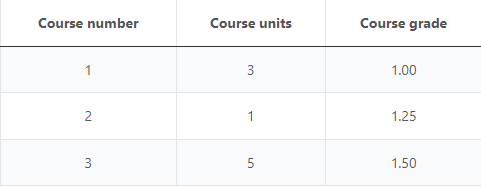
A GWA Calculator simplifies the process of calculating the Grade Weighted Average. It eliminates the need for manual computations, which can be time-consuming and prone to errors. By inputting your grades and the corresponding credit units, the calculator provides accurate results in seconds, saving time and reducing stress.GWA Calculator

Reasons to Choose the GWA Calculator

1. Cost-Effective

One of the biggest advantages of using a GWA Calculator is its cost-effectiveness. Many calculators are available online for free or at minimal cost, making them accessible to everyone. You don’t need to invest in expensive software or tools—simply use an online version to get your results.

2. Free of Errors

Manual calculations can be prone to mistakes, especially when dealing with multiple subjects and varying credit units. The GWA Calculator eliminates human error, ensuring accurate results every time. This reliability makes it an essential tool for students aiming for precision in their academic assessments.

3. Overall Assessment

The GWA Calculator doesn’t just compute averages; it offers a comprehensive overview of your academic performance. By analyzing your grades and their weightage, the tool provides insights into areas of strength and those needing improvement. This feature makes it invaluable for self-assessment and planning academic goals.

4. Wide Application

The GWA Calculator isn’t just for students. It’s also widely used by teachers, academic advisors, and institutions to evaluate student performance efficiently. Its versatility extends to various educational systems, making it suitable for high school, college, and even postgraduate programs.

5. Regular Updates

Many GWA Calculators are regularly updated to align with the latest academic grading systems. This ensures compatibility with new curriculums and grading scales, making it a reliable tool for users across different educational systems.

6. Time Saver

Time is of the essence, especially for busy students juggling multiple responsibilities. The GWA Calculator significantly reduces the time spent on calculations. What might take hours manually can be completed in seconds, freeing up time for other productive activities.

7. Easy to Access

The accessibility of the GWA Calculator is another reason for its popularity. Most calculators are web-based and don’t require installation, meaning you can access them anytime, anywhere, on any device with an internet connection.

8. User-Friendliness

A great feature of the GWA Calculator is its user-friendly interface. Even individuals with minimal technical skills can easily navigate the tool. The step-by-step instructions and intuitive design ensure a smooth experience, making it suitable for users of all ages.

Benefits of Using the GWA Calculator

a. Enhanced Academic Performance

By identifying areas of strength and improvement, the GWA Calculator helps students focus on what matters most. This targeted approach can lead to better academic performance over time.

b. Stress Reduction

The accuracy and speed of the GWA Calculator alleviate stress, especially during critical times like final exams or report submissions. Knowing your grades are calculated correctly provides peace of mind.

c. Improved Decision-Making

With a clear understanding of your academic standing, you can make informed decisions about course selections, extra tutoring, or even career choices.

d. Compatibility Across Platforms

Many are compatible with various devices, including smartphones, tablets, and computers. This versatility ensures that you can calculate your GWA anytime, no matter the device.

Key Features

Customizable Inputs: Allows you to adjust grading systems based on your institution’s criteria.
Offline Availability: Some calculators offer downloadable versions for offline use.
Data Security: Ensure the calculator doesn’t store or misuse your data.
Responsive Design: A mobile-friendly interface for seamless use on smaller screens.

How to Use a GWA Calculator

Using a GWA Calculator is straightforward:

  1. Input your grades for each subject.
  2. Enter the corresponding credit units.
  3. Click the “Calculate” button.
  4. Review your results, which display your overall GWA.

It is more than just a tool—it’s a game-changer for students, educators, and academic institutions alike. Its ability to provide accurate, error-free results quickly and conveniently makes it an indispensable resource in today’s academic world.

Whether you’re a student aiming to monitor your progress, a teacher evaluating class performance, or an institution seeking streamlined assessments, it has you covered. With its cost-effectiveness, user-friendliness, and wide application, it’s time to embrace the GWA Calculator as your go-to solution for grade computations.

By integrating this Calculator into your academic routine, you’re not just saving time and effort—you’re investing in precision and clarity, essential components of success in any educational journey.

Stop Learning English Language While Traveling in these Country

Traveling abroad is an opportunity to dive deep into new cultures and ways of life. While English is the world’s most widely spoken second language, relying too much on it may limit your travel experiences. In many countries, embracing the local language offers richer, more authentic interactions.Stop Learning EnglishIn this article, I’ll share why you should stop learning the English language while traveling, the benefits of learning local dialects, and why certain countries are ideal for practicing this approach.

Why Stop Learning English Language While Traveling

While English often serves as a universal language, it’s not always the best choice for immersing yourself in a destination. Here’s why:

1. Gain Cultural Depth

  • Languages carry the soul of a culture. Speaking the local tongue fosters a deeper understanding.

2. Connect with Locals

  • Locals appreciate the effort to speak their language, often responding warmly.

3. Unlock Hidden Gems

  • Outside English-speaking areas, learning the local language opens doors to authentic experiences.

4. Avoid Over-Tourism Pitfalls

  • Speaking a native language helps you navigate non-touristy areas, avoiding overly commercialized zones.

Countries Where You Should Stop Learning English Language

1. Malta

Although English is an official language in Malta, the local Maltese language plays a significant cultural role. By learning simple Maltese greetings like “Grazzi” (Thank you) or “Bonġu” (Good morning), you can better connect with the island’s unique history and traditions.Malta

2. South Africa

South Africa boasts 11 official languages, including Zulu, Xhosa, and Afrikaans. While English is widely spoken, using local languages shows respect for the country’s diversity. Mastering basics like “Molo” (Hello in Xhosa) or “Sawubona” (Hello in Zulu) adds a special touch to your travels.South Africa

3. Singapore

Singapore is a melting pot of cultures, where English serves as a common language. However, learning Mandarin, Malay, or Tamil can create more meaningful interactions with locals and enhance your understanding of their cultural heritage.Singapore

4. Belize

While English is the official language, Belizean Creole is widely spoken. Learning phrases in Creole, such as “Weh di go an?” (What’s happening?), allows you to connect more authentically with locals.Belize

5. Netherlands

The Dutch are known for their excellent English proficiency, but speaking Dutch phrases like “Dank je wel” (Thank you) or “Hoi” (Hi) can make your visit more personal and respectful. Locals often appreciate the effort, even if they quickly switch to English.Netherlands

6. Philippines

Filipinos are fluent in English, but the local Tagalog and Cebuano languages are the heart of everyday communication. Using basic Tagalog phrases like “Salamat” (Thank you) or “Kamusta” (How are you?) shows cultural curiosity and builds rapport.Philippines

7. India

India’s linguistic diversity is unmatched, with over 20 official languages. While English is widely used, especially in urban areas, learning regional languages like Hindi, Tamil, or Bengali enriches your travel experience. A simple “Namaste” (Hello) can go a long way in making connections.India

8. South Korea

South Korea’s dynamic blend of tradition and modernity draws visitors worldwide. While younger Koreans may know some English, learning Korean phrases can help you navigate food markets, subways, and local conversations.South Korea

Benefits of Learning Local Languages

1. Enriches Your Perspective

  • Learning a local language exposes you to unique cultural norms and values.

2. Enhances Travel Experiences

  • You gain access to local gems, off-the-beaten-path destinations, and authentic stories.

3. Builds Meaningful Relationships

  • Speaking the local language fosters trust and deeper connections with residents.

4. Boosts Confidence

  • Successfully communicating in another language is a rewarding experience that boosts self-assurance.

5. Makes You Culturally Aware

  • By learning another language, you gain insights into cultural sensitivities and traditions.

Practical Tips to Embrace Local Languages

1. Start Small

  • Begin with essential phrases and greetings to build confidence.

2. Use Language Apps

  • Apps like Duolingo and Rosetta Stone make language learning accessible and fun.

3. Practice with Locals

  • Engage in simple conversations with locals to improve your fluency.

4. Attend Local Classes

  • Many destinations offer language courses tailored to travelers.

5. Immerse Yourself

Surround yourself with local media, like TV shows, music, or newspapers, to enhance your learning.

When to Use English

While this article emphasizes the benefits of stopping the reliance on English, there are situations where English remains necessary:

1. Emergency Situations

Always know how to communicate key phrases in English during emergencies.

2. Major Tourist Hubs

English is often sufficient in globally renowned tourist areas.

3. Official Documentation

Use English for visa applications, permits, or official forms.

4. Global Connectivity

Communicate with fellow travelers from different countries using English as a common language.

Learning local languages instead of relying solely on English enhances your travel experiences and deepens cultural connections. By making an effort to embrace the native tongue, you not only gain respect from locals but also enrich your journey in ways you never imagined.

So, the next time you plan a trip, stop learning English language for that destination and focus on its native dialect instead. It’s a challenging yet rewarding way to see the world through a different lens.

Remember, travel isn’t just about visiting places; it’s about connecting with people, their stories, and their cultures—and language is the bridge to that connection.

5 Difficulties in Teaching English to Indian Students

Teaching English in a diverse country like India comes with its own set of unique challenges. With its rich linguistic heritage, India presents a classroom where students often speak multiple languages. This diversity can enrich learning but also brings specific “difficulties in teaching English” that educators must navigate with care and expertise.Difficulties in Teaching English

1. Multilingual Influence on Learning English

India is home to over 1,600 languages, and this multilingualism shapes students’ approach to learning English. For many, English is their second, third, or even fourth language. This background often leads to interference where structures and vocabulary from their native language influence English usage.

Challenges

  • Pronunciation struggles due to phonetic differences between English and regional languages.
  • Literal translations from the mother tongue causing grammatical errors.
  • Limited exposure to spoken English outside the classroom.

Solution

Teachers can embrace this diversity by comparing English grammar and vocabulary with students’ native languages. Highlighting commonalities can make learning relatable while correcting differences systematically.

2. Uneven Exposure to English

Access to English varies widely among Indian students, depending on their socio-economic backgrounds and geographic locations. Urban students often have better exposure to English through schools, media, and technology, while rural students might face a significant gap.

Challenges

  • Rural students often lack access to quality English education and materials.
  • Limited use of English at home reduces practice opportunities.
  • Students from underprivileged backgrounds may struggle with foundational skills.

Solution

Bridging this gap requires contextualized teaching strategies. Interactive and multimedia-based teaching tools, which are increasingly affordable, can help rural and underprivileged students grasp basic concepts.

3. Cultural Difference In Learning

India’s cultural diversity means students bring varied perspectives, learning styles, and attitudes toward English. For some, English is seen as a tool for global opportunities, while others might view it as a colonial imposition.

Challenges

  • Students may lack motivation if they perceive English as irrelevant.
  • Cultural differences in expressing ideas can hinder fluency.
  • Fear of making mistakes due to societal expectations can reduce participation.

Solution

Creating a supportive and inclusive environment is crucial. Teachers should emphasize practical applications of English and respect students’ cultural backgrounds while encouraging active participation without fear of judgment.

4. Rote Learning Over Functional Skills

The traditional Indian education system often prioritizes rote memorization over comprehension and application. This focus impacts how students learn English, with many excelling in grammar exercises but struggling to communicate effectively.

Challenges

  • Students often memorize vocabulary and grammar rules without understanding their use.
  • Limited opportunities for conversational practice hinder fluency.
  • Exams emphasize written English, neglecting speaking and listening skills.

Solution

Incorporating activities that encourage critical thinking and communication can shift this focus. Role-playing, group discussions, and real-world simulations can help students build functional skills in English.

5. Teacher Preparedness and Training

Teaching English requires specialized skills, but not all teachers in India have adequate training in language pedagogy. Teachers often rely on outdated methods, focusing heavily on textbooks rather than engaging, practical teaching.

Challenges:

  • Many teachers lack proficiency in spoken English themselves.
  • Limited professional development opportunities hinder innovation in teaching methods.
  • Overcrowded classrooms make individual attention challenging.

Solution

Investing in teacher training programs is essential. Workshops, online courses, and peer learning groups can equip teachers with modern teaching strategies, making lessons more effective and engaging.

Why Addressing These Challenges Matters

Overcoming these “difficulties in teaching English” is essential for empowering Indian students. English is often the bridge to higher education, global careers, and cross-cultural communication. Addressing these barriers can open new doors for students and contribute to India’s global competitiveness.5 Difficulties in Teaching English to Indian Students

FAQs

Q1. Why is teaching English in India tough?

  • Linguistic diversity and limited resources create challenges.

Q2. How does multilingualism impact English learning?

  • It causes pronunciation and grammar interference.

Q3. Why do students struggle with speaking English?

  • They lack conversational practice and exposure.

Q4. How can teachers address these issues?

  • Use interactive, student-focused teaching methods.

Q5. How does teacher training help?

  • It improves skills and modernizes teaching approaches.

Teaching English in India requires understanding the country’s linguistic, cultural, and educational nuances. By acknowledging and addressing these “difficulties in teaching English,” educators can create a more inclusive and effective learning environment. With the right strategies, teachers can help students overcome barriers and unlock the full potential of the English language.

European countries without their own language

Europe is a continent rich in culture, history, and languages. While most European nations boast their unique languages, a few stand out for not having a distinct native tongue that is solely their own which is often refer as the European countries without their own language.

These countries either use widely spoken international languages or share a linguistic identity with neighboring nations. This article explores the intriguing concept of European countries without their own language, delving into their histories, cultural nuances, and linguistic landscapes.European countries without their own languageA national language typically represents a country’s identity and heritage. However, some nations lack a unique language due to historical, cultural, or political reasons.

These nations adopt other languages for governance, education, and daily communication. This phenomenon often results from colonization, shared cultural ties, or strategic decisions to align with global communication standards.

European Countries Without Their Own Language

1. Luxembourg

Luxembourg is a multilingual country that does not have a single, distinct national language. Instead, it recognizes three official languages: Luxembourgish, French, and German. While Luxembourgish is widely spoken, it is closely related to German and shares similarities with regional dialects in neighboring countries. The adoption of multiple languages reflects Luxembourg’s history of being influenced by larger neighboring powers.

2. Liechtenstein

Liechtenstein, a small European principality, uses German as its official language. The country lacks a unique language of its own, as German serves as the primary medium for communication, education, and government. This is largely due to its cultural and historical ties to Germany and Austria.

3. Andorra

Andorra is a fascinating case among European countries without their own language. The official language of Andorra is Catalan, which is shared with Catalonia, a region in Spain. Despite being an independent nation, Andorra does not have a distinct language, relying on Catalan as a marker of its identity.

4. San Marino

San Marino, one of the world’s oldest republics, uses Italian as its official language. Though an independent state, San Marino does not have a language unique to its borders. This is a direct result of its geographical and cultural proximity to Italy.

5. Monaco

Monaco, renowned for its luxury and wealth, also lacks a distinct native language. French is the official language of Monaco, reflecting its strong historical ties to France. However, Italian and English are also commonly spoken due to the country’s international influence.

6. Vatican City

The Vatican City is unique in many ways, including its linguistic setup. Latin, a classical language, is its official language, but it is primarily used for religious purposes. Italian serves as the main language for communication and administration, highlighting its dependence on Italy for cultural and linguistic influences.

Why Do These Countries Lack Their Own Language?

Several factors contribute to the absence of a unique national language:

  • Historical Influence: Many of these nations have been under the influence of larger neighbors, adopting their languages for practical purposes.
  • Size and Population: Smaller nations often align linguistically with neighboring countries to facilitate trade, diplomacy, and cultural exchange.
  • Globalization: Embracing widely spoken languages like French, German, or Italian allows these countries to maintain relevance on an international scale.
  • Geopolitical Factors: Historical events, such as unions and treaties, often shape the linguistic identities of smaller nations.

Cultural Impact of Shared Languages

Although these countries lack a unique language, their cultures remain distinct. Shared languages allow them to participate in a broader linguistic and cultural community while retaining their identities. For example:

Luxembourg’s Multilingualism: The coexistence of Luxembourgish, French, and German enriches the country’s cultural fabric.

Andorra’s Catalan Identity: While Andorra shares Catalan with Spain, it has preserved its own cultural traditions and independence.

Benefits of Adopting Another Language

  • Global Integration: Using a widely spoken language enhances international communication.
  • Economic Growth: Facilitating trade and tourism is easier with a recognized language.
  • Educational Advantages: Citizens benefit from access to international academic resources.

Challenges Faced by These Nations

While adopting a shared language offers benefits, it also presents challenges:

  1. Loss of Unique Identity: The absence of a distinct language can blur national identity.
  2. Dependence on Neighbors: Relying on another country’s language may lead to cultural overshadowing.
  3. Language Preservation Efforts: Smaller nations often struggle to promote and preserve lesser-used dialects.

The Future of Languages in These Countries

European countries without their own language have found ways to thrive culturally and economically. However, there is a growing focus on preserving linguistic diversity. Governments and organizations in these nations are investing in language education, promoting regional dialects, and fostering cultural pride.Countries without their own language


The linguistic landscape of Europe is as diverse as its geography. European countries without their own language may not possess a unique tongue, but they exemplify the power of cultural adaptation and resilience. By embracing shared languages, these nations bridge cultural divides and contribute to a more interconnected world.

The concept of European countries without their own language continues to intrigue linguists, historians, and travelers alike. These nations stand as testaments to the rich and complex history of Europe, where language serves as both a tool of communication and a symbol of identity.

Rich Countries that Don’t Speak English

When thinking about rich countries, English-speaking nations like the United States, Canada, or the UK often come to mind. However, several prosperous countries thrive economically without relying on English as a primary language. This article explores some of these rich countries that don’t speak English, their economic strengths, and what makes them unique.Rich Countries that Don't Speak EnglishWealth isn’t only about GDP. It also includes quality of life, infrastructure, healthcare, and innovation. Non-English-speaking countries excel in these areas, offering valuable lessons to the world. Some of the rich countries that don’t speak English are:

1. Germany

  • Germany is Europe’s biggest economy and a global leader in manufacturing.
  • Its industries, like automotive (home to BMW and Mercedes-Benz), engineering, and pharmaceuticals, are benchmarks of excellence.
  • German is the official language, with a rich cultural heritage influencing science, music, and art.

2. Japan

  • Japan’s GDP ranks among the top globally, driven by technology and innovation.
  • The nation excels in electronics, robotics, and automobiles.
  • Japanese is the official language. Despite English education, most business dealings occur in the Japanese language.

3. Switzerland

  • Switzerland’s banking system, tourism, and pharmaceutical industries contribute significantly to its wealth.
  • Though German, French, Italian, and Romansh are official, English isn’t prominent.

4. South Korea

  • South Korea is home to tech giants like Samsung and LG.
  • Its entertainment industry also boosts its economy.
  • Korean is the primary language, reflecting its unique identity.

5. Norway

  • Norway’s economy thrives on oil exports and green energy initiatives.
  • Norwegian is dominant, yet the nation maintains a distinct non-English cultural identity.

6. France

  • France boasts strong industries, including fashion, technology, and aerospace.
  • Its GDP is among the highest in Europe.
  • French remains the language of business and daily life.

7. China

  • China’s manufacturing, technology, and export industries make it a key player in global wealth.
  • Mandarin is spoken by the majority, with limited reliance on English.

8. United Arab Emirates (UAE)

  • The UAE thrives on oil, real estate, and tourism, especially in Dubai and Abu Dhabi.
  • Arabic is the official language, despite an international business community.

9. Sweden

  • Sweden excels in technology and sustainable development, with a high per capita income.
  • Swedish is the official language, with limited dependence on English.

10. Italy

  • Italy’s economy is bolstered by luxury goods, fashion, and automotive industries.
  • Italian dominates daily life and business, preserving the nation’s identity.

Lessons From Rich Non-English-Speaking Countries

  1. Diverse Economies Thrive: Countries like Germany and Japan show how innovation can fuel growth.
  2. Cultural Identity Matters: Maintaining a native language fosters unique global contributions.
  3. Adaptability is Key: Nations like Switzerland balance multiple languages without losing cultural essence.

Why Explore Rich Countries That Don’t Speak English?

Visiting or doing business in these nations highlights global diversity. Learning their languages and customs enriches personal and professional growth.

In conclusion, rich countries that don’t speak English prove that success isn’t tied to a single language. Their economic models and cultural uniqueness inspire a world of possibilities.

FAQs

Q1: Why do these countries succeed without English?

A1: They leverage strong local industries, innovation, and cultural identity.

Q2: Do they speak English at all?

A2: While English is taught as a second language, it’s not commonly used for daily business or communication.

Q3: Can I visit these countries without knowing their languages?

A3: Yes, but learning basic phrases in the local language is helpful.

Q4: Are these countries good for business?

A4: Absolutely. Their stable economies and skilled workforces make them ideal for investments.

These countries demonstrate that success transcends language. They’ve achieved remarkable economic growth while preserving their linguistic and cultural identities. By leveraging local strengths, fostering innovation, and embracing their unique traditions, they offer valuable lessons to the world. Countries that Don't Speak EnglishExploring these nations enriches perspectives and opens doors to opportunities that go beyond the confines of English-speaking environments.

Is Japan’s education system better than the US?

Education plays an important role in shaping the future of individuals and nations. Among global education systems, Japan and the United States are often compared due to their unique approaches. The question frequently arises: Is Japan’s education system better than the US? Both countries excel in certain areas, but which system truly stands out? Let’s explore whether Japan’s education system is better than the US.Education

Japan’s Education System

Japan’s education system is globally admired for its discipline, structure, and academic rigor. With a focus on holistic development, it emphasizes academic excellence, moral education, and physical fitness. Japanese schools instill values of respect, responsibility, and teamwork early on.

US Education System

The US education system is known for its flexibility, creativity, and diversity. American schools encourage critical thinking, innovation, and individuality. With a wide range of extracurricular activities, students have opportunities to explore their passions beyond academics.

Key Features of Japan’s Education System

1. Structured Curriculum

  • Japan follows a uniform curriculum nationwide, ensuring consistency in education quality.

2. Focus on Discipline and Manners

  • Students learn life skills, respect, and social responsibility from an early age.

3. Daily Cleaning Routines

  • Schools encourage students to clean classrooms, fostering responsibility and teamwork.

4. Entrance Exams

  • Academic competitiveness is high, with rigorous entrance exams for prestigious schools.

5. School Lunch Programs

  • Nutritious, balanced meals are provided, promoting healthy habits.

Academic Rigor: Japan vs USA

Japanese students often outperform their American counterparts in math and science. The emphasis on rote learning and regular testing helps students master fundamental concepts. In contrast, the US prioritizes conceptual understanding, which fosters creativity but may not always yield high test scores.

Discipline and Behavior

Japanese schools excel in maintaining discipline. From punctuality to respecting teachers, students are held to high standards. In the US, discipline varies by school, with some institutions struggling to address behavioral issues effectively.

Teacher-Student Relationship

In Japan, teachers act as role models, and students often develop lifelong respect for them. In the US, the relationship is more casual, encouraging open dialogue but sometimes lacking the reverence seen in Japan.

Extracurricular Activities

While Japanese schools focus heavily on academics, extracurricular activities like sports and clubs are mandatory. However, US schools offer a broader range of activities, allowing students to pursue diverse interests.

Innovation and Creativity

The US education system is unparalleled in fostering innovation. Programs like STEM initiatives and maker spaces encourage students to think outside the box. Japan, while academically rigorous, sometimes lags in promoting creativity.

Higher Education Opportunities

The US leads in higher education, boasting world-class universities like Harvard, MIT, and Stanford. Japan’s universities are excellent but less recognized internationally.

Cultural Influence on Education

Cultural differences significantly impact education systems. Japanese culture values discipline, hard work, and respect, which is reflected in its schools. American culture, on the other hand, emphasizes individuality, freedom, and self-expression.

Challenges in Japan’s Education System

1. High Pressure

  • Students face immense stress due to entrance exams and academic expectations.

2. Lack of Creativity

  • The system often prioritizes rote learning over creative thinking.

3. Bullying Issues

  • Bullying (ijime) remains a concern in Japanese schools.

Challenges in the US Education System

1. Inequality

  • Education quality varies based on socioeconomic status and location.

2. Discipline Problems

  • Maintaining discipline can be challenging in diverse settings.

3. Student Debt

  • College education is expensive, leading to long-term financial burdens.

Why Some Believe Japan’s Education Is Better Than the US

1. Consistency and Discipline

Japan ensures uniform education quality, unlike the US, where schools differ vastly.

2. Health and Nutrition

Japan’s school lunch programs promote balanced diets, which the US lacks.

3. Focus on Character Development

Japanese schools emphasize values and teamwork, fostering well-rounded individuals.

Why Some Prefer the US Education System

1. Flexibility and Creativity

The US allows students to explore diverse interests and career paths.

2. Global Recognition

American universities dominate global rankings, attracting international students.

3. Diversity and Inclusion

US schools celebrate multiculturalism, preparing students for a globalized world.

Is Japan’s Education System Better Than the US? A Balanced View

The answer depends on what one values in education. Japan excels in discipline, academic rigor, and consistency, while the US shines in creativity, diversity, and higher education opportunities. Parents and students must consider their goals and priorities when deciding which system is better for them.

Striking the Right Balance

Both Japan and the US offer valuable lessons in education. Japan’s structured approach and discipline can inspire improvements in the US system. Similarly, Japan can learn from the US’s emphasis on creativity and inclusivity.

Instead of asking, “Is Japan’s education system better than the US?” we should focus on integrating the best practices from both to create a holistic education system.Japan's education system better than the USAs someone deeply interested in global education systems, I’ve observed the strengths and weaknesses of both Japan and the US. While no system is perfect, understanding their differences helps us appreciate the value of education tailored to cultural and societal needs.

10 Country not Studying English in Europe

When traveling or studying abroad, understanding the linguistic landscape of your destination is crucial. While English is widely spoken in many parts of Europe, some countries emphasize their native or regional languages instead. In this article, we’ll explore 10 country not studying English in Europe as their primary language in schools or for everyday use. Understanding these countries’ linguistic preferences can enrich your travel or study experience.

Why Language Preferences Matters

As someone who has traveled extensively across Europe, I’ve noticed the stark contrasts in language priorities. Choosing a country not studying English in Europe could mean facing challenges but also enjoying a more immersive cultural experience. These countries often focus on preserving their linguistic heritage, making them unique destinations.English Language

1. France

France has long prioritized its native tongue, French. English is taught as a secondary language, but the emphasis is on French in schools, workplaces, and public life. As a result, travelers may encounter locals who prefer French over English.

Personal Tip: A basic knowledge of French can go a long way in fostering goodwill during your stay.

2. Spain

Spain focuses heavily on Spanish (Castilian), with regional languages like Catalan, Basque, and Galician also taking precedence. English is taught in schools but often lacks practical application among locals.

Key Insight: Visiting rural areas may require a good grasp of Spanish for effective communication.

3. Italy

Italy cherishes Italian as the cornerstone of its cultural identity. While English is part of the curriculum, it is often not widely spoken, particularly outside major cities like Rome or Milan.

Experience Note: Learning basic Italian phrases can make your trip more enjoyable.

4. Russia

Although Russia is geographically vast and spans both Europe and Asia, English is not a primary focus of its educational system. Russian is the dominant language, and even in urban centers like Moscow, finding fluent English speakers can be challenging.

Travel Advice: Familiarity with Cyrillic script and basic Russian phrases is invaluable.

5. Germany

While Germany boasts a high standard of education, the focus remains on German. English proficiency varies by region, with younger generations generally more adept than older ones.

Tip for Visitors: Big cities like Berlin and Munich are more English-friendly than rural areas.

6. Portugal

Portuguese takes precedence in Portugal, with English taught as a secondary language. Many locals, especially in smaller towns, prioritize their native tongue over English.

Pro Insight: Coastal areas like Algarve are more likely to have English-speaking locals due to tourism.

7. Hungary

Hungarian, one of Europe’s most complex languages, is the mainstay in Hungary. English education is increasing but still lags behind in rural areas and older demographics.

Insider Tip: Budapest is an exception, offering more English-speaking resources for tourists.

8. Poland

Poland prioritizes Polish, with English often seen as an academic or professional skill rather than a daily necessity. This distinction makes it a country not studying English in Europe in practical terms.

Advice: Learn some Polish phrases to connect better with locals.

9. Czech Republic

In the Czech Republic, Czech dominates daily life. While English is gaining traction, especially among younger generations, the emphasis is still on preserving the Czech language.

Traveler Note: English-speaking resources are better in Prague compared to smaller towns.

10. Greece

Greek is central to Greece’s education and culture. While the tourism industry ensures some level of English proficiency in hotspots, many locals outside urban centers primarily speak Greek.

Recommendation: Mastering the Greek alphabet can enhance your travel experience.

Tips for Navigating Non-English-Speaking Countries

  1. Learn Basic Phrases: A few words in the local language can make a big difference.
  2. Use Translation Apps: Apps like Google Translate can be lifesavers.
  3. Respect Local Norms: Show interest in the local language and customs.
  4. Enroll in Language Classes: If staying long-term, learning the language is invaluable.

FAQs

1. Is it hard to travel in non-English-Speaking European countries?

  • It can be challenging, but basic local phrases and translation apps help.

2. Why don’t some countries emphasize English?

  • They prioritize preserving cultural identity and native language traditions.

3. Are younger people more likely to speak English?

  • Yes, younger generations often have better English skills, especially in urban areas.

5. How can I prepare for travel to these countries?

  • Learn basic phrases, use translation tools, and respect local languages.

Exploring a country not studying English in Europe offers unique challenges and rewards. From France to Greece, these nations emphasize their linguistic heritage, offering travelers and students a chance to experience authentic European cultures. With preparation and a willingness to embrace new languages, your journey can be both enriching and unforgettable.Country not Studying English in EuropeBy focusing on countries where English isn’t the default, you’ll discover hidden gems of culture, tradition, and history. So, pack your bags, grab a phrasebook, and dive into the linguistic diversity Europe has to offer!

What is a Transcript for a Job with Sample?

In today’s competitive job market, a well-crafted transcript for a job can set you apart from other candidates. But what exactly is a transcript for a job, and how can it help you land your dream position?

This comprehensive article will answer all your questions while providing a sample transcript for a job, ensuring your success.

What is a Transcript for a Job?

A transcript for a job is a detailed document that outlines your academic qualifications and achievements. It serves as proof of your educational background, showcasing your skills, knowledge, and suitability for the role you’re applying for.Report for Job

Employers often request transcripts to verify your credentials and assess whether your academic performance aligns with the job’s requirements.

Why Do Employers Require a Transcript for a Job?

Verification of Credentials:

  • Employers want to ensure that your educational qualifications are genuine.

Understanding Your Skills:

  • Transcripts highlight your coursework and grades, reflecting your strengths.

Job Fit Assessment:

  • Certain roles require specific qualifications; transcripts help evaluate your eligibility.

Types of Transcripts for a Job

There are two main types of transcripts employers may request:

Official Transcripts

  • Issued by educational institutions.
  • Contains institution seal or signature.
  • Usually required for formal applications.

Unofficial Transcripts

  • Accessible online by students.
  • Lacks official seal/signature.
  • Suitable for preliminary reviews.

How to Obtain Your Transcript for a Job

  • Contact Your Institution: Reach out to the registrar’s office or student portal.
  • Pay Any Fees: Some institutions charge a nominal fee for official transcripts.
  • Request Format: Specify whether you need a physical copy or an electronic one.

What Information Does a Transcript Include?

A transcript typically contains:

  • Your full name and student ID.
  • List of courses completed.
  • Grades earned for each course.
  • Degree awarded and graduation date.
  • Academic honors or recognitions.

How to Use a Transcript for a Job Application

1. Attach It to Your Resume

  • If requested, include your transcript as part of your job application package.

2. Highlight Relevant Coursework

  • Emphasize courses that align with the job requirements.

3. Be Transparent

  • Provide accurate transcripts to avoid discrepancies during background checks.

A Sample Transcript for a Job

Name: [Your Name]
Student ID: 123456789
Institution: University of Excellence
Degree: Bachelor of Science in Computer Science
Graduation Date: May 2023

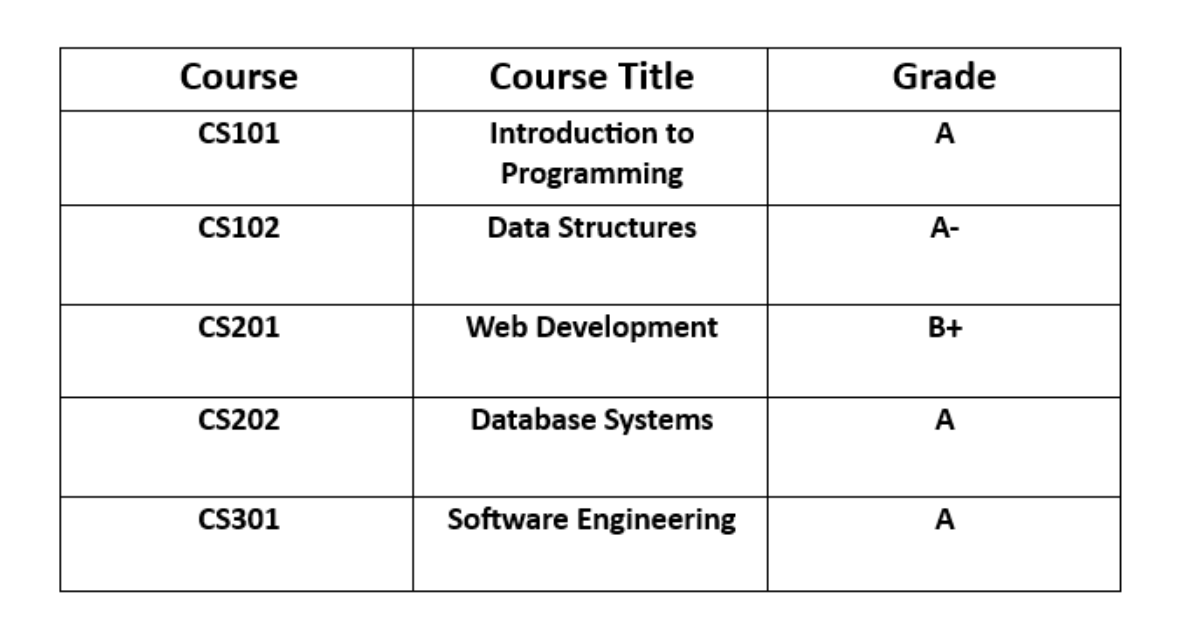
Coursework and Grades:Transcript for Job

Tips for Submitting a Transcript for a Job

1. Double-Check Details

  • Ensure the transcript accurately reflects your academic achievements.

2. Tailor for the Role

  • Highlight courses and skills relevant to the job.

3. Request Early

  • Obtain your transcript well in advance to avoid last-minute stress.

4. Provide Both Formats

  • If possible, offer both electronic and hard-copy versions to accommodate employer preferences.

FAQs

1. Can I use an unofficial transcript for job applications?

  • Yes, but only if the employer specifies it’s acceptable.

2. What if I have poor grades?

  • Focus on relevant coursework, skills, and experiences that compensate for low grades.

3. How long does it take to get a transcript?

  • It depends on the institution; it may take anywhere from a few hours to several weeks.

4. Should I include my transcript if it’s not requested?

  • No, only provide it if the job posting specifically asks for it.

The Role of Transcripts in Career Advancement

A transcript for a job isn’t just a piece of paper; it’s a reflection of your dedication, perseverance, and potential. Employers value candidates who take their education seriously, and a strong transcript can be the key to unlocking new opportunities.

Our transcript for a job application is a powerful tool that can make or break your chances of securing your desired role. By understanding its importance, obtaining an accurate copy, and presenting it strategically, you can position yourself as a top candidate. Remember, preparation and attention to detail are crucial in showcasing your academic achievements effectively.

Whether you’re a recent graduate or an experienced professional, investing time in perfecting your transcript for a job is an investment in your future.


What is a transcript for school?

In the world of academics, one crucial document often gets overlooked despite its importance: the transcript for school. Whether you’re applying to colleges, transferring schools, or even job hunting, your school transcript plays a pivotal role in representing your academic journey.

In this blog, I’ll unpack everything about school transcripts, drawing from years of experience helping students navigate their academic pathways.

What is a Transcript for School?

A transcript for school is an official document that details a student’s academic history. It is a comprehensive summary of the courses taken, grades earned, and sometimes additional information like attendance or extracurricular activities. Think of it as your academic report card that spans years rather than just a semester.Transcript for school

Importance of Transcript for School

1. College Admissions

When applying to colleges or universities, admissions committees rely heavily on your transcript for school. It helps them assess your academic readiness and consistency over time.

2. Scholarships and Financial Aid

Scholarship committees often request a copy of your transcript to determine your eligibility for merit-based financial aid.

3. Transferring Schools

If you’re switching schools, your transcript for school helps the new institution place you in appropriate classes based on your past performance.

4. Employment Opportunities

Some employers, especially for internships or entry-level roles, may ask for your academic transcript to gauge your skills and educational background.

5. Graduate Programs

For those pursuing higher education, transcripts are a non-negotiable requirement for applications to graduate programs.

Types of Transcripts for School

Understanding the different types of school transcripts can clarify their uses:

1. Official Transcripts

These are issued directly by the school and usually bear a seal or signature. They are often sent directly to the requesting institution.

2. Unofficial Transcripts

These are copies available to students for personal use. While they contain the same information, they lack the official seal or signature.

3. High School Transcripts

Specifically for high school students, this version outlines grades from freshman to senior year, test scores, and sometimes volunteer work.

4. College Transcripts

These focus on courses taken during college, grades received, and degree completion.

How to Obtain Your Transcript for School

Step 1: Identify the Purpose

Before requesting your transcript, understand why you need it. This determines whether you require an official or unofficial copy.

Step 2: Contact Your School

Reach out to your school’s registrar or administrative office. Most schools have an online portal for transcript requests.

Step 3: Pay Any Fees

Some institutions charge a small fee for issuing official transcripts. Be prepared to cover these costs.

Step 4: Specify Delivery Preferences

Choose how you want the transcript delivered. Options often include electronic delivery or physical mail.

Step 5: Follow Up

If you have tight deadlines, ensure the transcript is sent and received on time.

What Information is Included in a Transcript for School?

A standard transcript for school typically contains:

  • Personal Information: Name, student ID, and date of birth.
  • Academic Record: List of courses, grades, and credits earned.
  • GPA: Cumulative and semester-wise Grade Point Average.
  • Attendance Record: In some cases, schools include attendance history.
  • Standardized Test Scores: SAT, ACT, or other relevant exams (if applicable).
  • Honors and Awards: Recognitions or distinctions earned during your academic career.

How to Interpret Your Transcript for School

Understanding your transcript ensures you can accurately explain it during interviews or applications:

Grades and Credits

  • Each course lists a grade alongside the number of credits earned. Higher grades and consistent performance reflect positively.

Course Levels

  • Advanced Placement (AP), Honors, or remedial courses are often highlighted.

Cumulative GPA

  • This number represents your overall academic performance across all semesters.

Remarks or Annotations

  • Some transcripts include teacher or administrative comments, which can indicate exceptional performance or areas for improvement.

Common Issues with Transcripts and How to Solve Them

1. Errors in Grades

  • Problem: Incorrect grades or missing courses.
  • Solution: Contact the school immediately to rectify mistakes.

2. Delays in Delivery

  • Problem: The transcript was not received by the requested institution on time.
  • Solution: Follow up with both your school and the recipient.

3. Lost Records

  • Problem: School records are unavailable due to closure or other issues.
  • Solution: Reach out to the district office or the governing education body.

Tips to Maintain a Strong Transcript for School

1. Prioritize Academics

  • Consistently aim for high grades in all subjects.

2. Engage in Extracurriculars

  • Activities like sports, clubs, or volunteering can be noted on your transcript, showcasing a well-rounded profile.

3. Stay Organized

  • Keep track of your academic progress and address any concerns promptly.

4. Communicate with Teachers

  • Strong relationships with educators can help if disputes arise about grades.

5. Avoid Dropping Courses

  • Frequent withdrawals can leave gaps in your transcript, which might raise questions.

Digital vs Paper Transcripts

The shift toward digital records has changed how we access and share transcripts:

  • Digital Transcripts: Delivered electronically, these are faster and eco-friendly.
  • Paper Transcripts: Traditional and often required for formal submissions.

FAQs

1. How long does it take to get a transcript?

  • It varies by school but typically takes 3-10 business days.

2. Can I edit my transcript?

  • No, altering a transcript is considered fraudulent and can have severe consequences.

3. Do colleges accept unofficial transcripts?

  • Some colleges may accept unofficial transcripts during the initial application process, but official ones are required later.

4. What if my school is closed?

  • Contact the district or governing body overseeing your former school.

A transcript for school is more than just a piece of paper—it’s a testament to your academic journey. By understanding its significance and maintaining a strong record, you can open doors to countless opportunities. Whether you’re aiming for college admissions, scholarships, or a dream job, your transcript reflects the dedication and hard work you’ve invested in your education.education reportBy sharing my insights, I hope to have demystified the concept of school transcripts for you. Remember, always keep your academic records in order because you never know when you’ll need them!

What are the most popular subjects in the world?

Education shapes the foundation of knowledge, skills, and opportunities. Around the globe, certain subjects have garnered universal appeal due to their versatility, relevance, and career prospects.

This article explores the most popular subjects in the world, offering insights backed by expertise, authority, and trustworthiness. Whether you’re a student exploring academic pathways or a lifelong learner, these subjects provide valuable learning opportunities which makes them one of the most popular subjects in the world.

1. Business and ManagementBussiness Management

Why It’s Popular:

Business and Management stand as global favorites for students aiming for leadership roles in corporate environments. The demand for entrepreneurs, business analysts, and managers continues to grow as industries evolve and makes it one of the most popular subjects in the world.

Key Areas of Study:

  • Business Administration
  • Entrepreneurship
  • Finance and Marketing
  • Human Resource Management

Career Opportunities:

Graduates find roles in multinational corporations, startups, or as independent business consultants. The globalized economy ensures business knowledge remains relevant.

2. Computer Science and Information TechnologyInformation Technology

Why It’s Popular:

As the digital world expands, Computer Science and IT are indispensable. They offer opportunities in software development, data analysis, and cybersecurity.

Key Areas of Study:

  • Web Development
  • Artificial Intelligence
  • Data Science
  • Networking and Security
  • IT Diploma Courses Online

Career Opportunities:

IT professionals enjoy lucrative roles in tech companies, startups, and research institutions. The industry’s consistent innovation ensures exciting challenges.

3. Medicine and HealthcareHealth Care

Why It’s Popular:

Medicine and Healthcare appeal to those passionate about improving lives. The field guarantees job security, prestige, and a chance to make meaningful contributions making it one of the most popular subjects in the world.

Key Areas of Study:

  • General Medicine
  • Nursing
  • Public Health
  • Biomedical Science

Career Opportunities:

Doctors, nurses, and researchers are always in demand. Specialized fields like telemedicine are also emerging as high-growth areas.

4. EngineeringEngineering

Why It’s Popular:

Engineering remains a timeless favorite due to its application in solving real-world problems. From infrastructure to technology, engineers shape the world making it one of the most popular subjects in the world.

Key Areas of Study:

  • Civil Engineering
  • Mechanical Engineering
  • Electrical and Electronics Engineering
  • Aerospace Engineering

Career Opportunities:

Graduates contribute to construction, technology development, and renewable energy projects. Their skills are globally valued.

5. EducationEducation

Why It’s Popular:

Education empowers communities, and teaching remains a respected profession. Many pursue this field to make a difference in others’ lives.

Key Areas of Study:

  • Early Childhood Education
  • Special Education
  • Curriculum Development
  • Educational Leadership

Career Opportunities:

Educators, academic administrators, and curriculum designers play vital roles in shaping learning environments.

6. PsychologyPsychology

Why It’s Popular:

Psychology intrigues those curious about human behavior and mental health. The growing awareness of mental well-being has boosted its popularity making it one of the most popular subjects in the world.

Key Areas of Study:

  • Clinical Psychology
  • Counseling
  • Behavioral Science
  • Neuropsychology

Career Opportunities:

Psychologists, counselors, and therapists are increasingly in demand. This field also finds applications in HR, marketing, and research.

7. LawLaw

Why It’s Popular:

Law attracts those seeking justice and societal impact. It equips students to navigate complex legal systems worldwide.

Key Areas of Study:

  • Corporate Law
  • International Law
  • Criminal Justice
  • Human Rights Law

Career Opportunities:

Lawyers, judges, and legal advisors serve in courts, corporations, and non-governmental organizations (NGOs).

8. Fine Arts and DesignArts and Design

Why It’s Popular:

Fine Arts and Design encourage creativity and self-expression, appealing to artistic minds. The rise of digital platforms has broadened its scope making it one of the most popular subjects in the world.

Key Areas of Study:

  • Graphic Design
  • Fashion Design
  • Animation and Visual Effects
  • Photography

Career Opportunities:

Artists and designers find opportunities in media, advertising, and entertainment industries, blending passion with profession.

9. Environmental ScienceEnvironmental Science

Why It’s Popular:

With global concerns about climate change, Environmental Science is gaining traction. It focuses on sustainability and conservation efforts.

Key Areas of Study:

  • Ecology
  • Renewable Energy
  • Environmental Policy
  • Climate Change Science

Career Opportunities:

Environmental scientists, policymakers, and conservationists contribute to sustainable development and ecological preservation.

10. Mathematics and StatisticsMathematics

Why It’s Popular:

Mathematics and Statistics form the backbone of countless disciplines. Their logical approach appeals to problem-solvers.

Key Areas of Study:

  • Pure Mathematics
  • Applied Statistics
  • Cryptography
  • Actuarial Science

Career Opportunities:

Mathematicians and statisticians work in finance, technology, and academia, supporting data-driven decision-making.

11. Languages and Literatureliterature


Why It’s Popular:

Languages connect cultures, while Literature deepens understanding of human experiences. This subject enriches communication skills.

Key Areas of Study:

  • Linguistics
  • Comparative Literature
  • Translation Studies
  • Creative Writing

Career Opportunities:

Graduates excel as translators, editors, writers, and educators, fostering cross-cultural interactions.

12. History and Political ScienceHistory and Political Science

Why It’s Popular:

History and Political Science offer insights into societal evolution and governance. They attract critical thinkers and policy enthusiasts making it one of the most popular subjects in the world.

Key Areas of Study:

  • Ancient Civilizations
  • Political Theory
  • International Relations
  • Public Policy

Career Opportunities:

Historians, political analysts, and diplomats influence public policies and global relations.

13. Biology and Life SciencesBiology

Why It’s Popular:

Biology delves into life’s intricacies, from cells to ecosystems. It’s vital for medicine, agriculture, and environmental science making it one of the most popular subjects in the world.

Key Areas of Study:

  • Microbiology
  • Genetics
  • Marine Biology
  • Biotechnology

Career Opportunities:

Biologists, geneticists, and researchers contribute to healthcare, agriculture, and conservation.

14. EconomicsEconomic

Why It’s Popular:

Economics analyzes how societies allocate resources. It’s essential for understanding markets and global finance.

Key Areas of Study:

  • Macroeconomics
  • Microeconomics
  • Econometrics
  • Development Economics

Career Opportunities:

Economists, financial analysts, and policy advisors shape fiscal policies and market strategies.

15. PhilosophyPhilosophy

Why It’s Popular:

Philosophy nurtures critical thinking and ethical reasoning. It’s favored by those questioning life’s fundamental aspects which makes it one of the most popular subjects in the world.

Key Areas of Study:

  • Ethics
  • Logic
  • Metaphysics
  • Epistemology

Career Opportunities:

Philosophers find roles in academia, policy-making, and think tanks, addressing moral and societal dilemmas.

Each of these most popular subjects in the world thrives due to its relevance, adaptability, and demand across industries. They cater to diverse interests, ensuring every learner finds their niche.

Whether you’re drawn to technology, creativity, or societal impact, these subjects provide rewarding career paths. They reflect evolving trends, meeting global challenges with innovative solutions.

Embark on your educational journey today by exploring what resonates with your passions and goals. Education is not just about employment; it’s about enriching your perspective and contributing to the world.


Why English Language is very important in India?

The English language holds a significant place in India, shaping the nation’s progress and bridging gaps between its diverse cultures.

With its roots in colonial history, English has evolved into a vital tool for communication, education, and economic development in the country.English LanguageIn this article, we’ll delve into the various reasons why the English language is very important in India, highlighting its role in personal growth, national integration, and global connectivity.

The Role of English in Education

1. Medium of Instruction

  • English is the preferred medium of instruction in many schools and universities across India. It opens doors to quality education and makes global knowledge accessible.

2. Access to Global Knowledge

  • Most advanced research, scientific publications, and technological resources are available in English. Proficiency in English allows Indian students to say updated and competitive globally.

3. Competitive Exams and Higher Studies

  • Exams like the GRE, TOEFL, and IELTS require strong English skills, making it crucial for students aspiring to study abroad.

English as a Professional Language

1. Corporate Communication

  • The language of the corporate world is English. Multinational companies in India demand fluency in English for effective communication and collaboration.

2. Career Advancement

  • Proficiency in English enhances employability and opens opportunities for high-paying jobs in fields like IT, digital marketing, and international business.

3. Freelancing and Remote Work

  • The growing gig economy benefits those fluent in English, enabling them to connect with clients worldwide.

English: A Bridge Across Cultures

1. National Integration

  • With over 1,600 languages spoken in India, English serves as a neutral medium for inter-state communication, fostering unity among diverse communities.

2. Global Connectivity

  • English connects India to the global community. It is the primary language for international relations, trade, and cultural exchange.

English in Digital and Social Media

Dominance of English Content

  • The majority of online content, including websites, blogs, and tutorials, is in English. Being fluent helps individuals access and create digital resources effectively.

Social Media Influence

  • Platforms like Facebook, Instagram, and LinkedIn predominantly use English, making it essential for personal branding and networking.

Benefits of Learning English in India

1. Improved Cognitive Skills

  • Learning English boosts memory, problem-solving abilities, and critical thinking.

2. Enhanced Confidence

  • Speaking fluent English boosts self-esteem, making individuals more confident in social and professional settings.

3. Cultural Exposure

  • English provides access to global literature, films, and music, broadening horizons and fostering cultural understanding.

Challenges in English Language Education

1. Unequal Access

  • Quality English education is often limited to urban areas, leaving rural students at a disadvantage.

2. Teacher Training

  • Many schools lack trained English teachers, affecting the quality of instruction.

3. Socio-Economic Barriers

  • High fees for English-medium schools deter economically weaker sections from accessing English education.

Steps to Improve English Language Skills in India

1. Government Initiatives

  • Programs like the National Education Policy (NEP) emphasize English education alongside regional languages.

2. EdTech Platforms

  • Online platforms like Duolingo and BYJU’S make English learning accessible and affordable.

3. Self-Learning

  • Watching English movies, reading books, and practicing spoken English are effective self-learning methods.

The Global Impact of English Proficiency in India

1. Economic Growth

  • English proficiency attracts foreign investment and boosts sectors like IT and BPO, contributing to India’s GDP.

2. Soft Power

  • Bollywood and Indian authors writing in English, like Arundhati Roy and Chetan Bhagat, enhance India’s cultural influence worldwide.

3. Diplomatic Advantage

  • English Fluency strengthens India’s position in global forums like the UN and WTO.

English and Personal Development

1. Communication Skills

  • Proficiency in English enhances interpersonal communication, helping individuals connect across cultures.

2. Leadership Qualities

  • English fluency is often linked to leadership roles in organizations and communities.

3. Self-Expression

  • English provides a platform for creative expression through writing public speaking, and content creation.

English Language is ImportantEnglish Language is a unifying force, a gateway to global opportunities, and a means of personal and national growth. While challenges remain, the increasing focus on English education and technological advancements promise a brighter future. By embracing English alongside native languages, India continues to thrive as a multilingual and multicultural nation.

What is the University Grading System in the UK?

England, Scotland, Wales, and Northern Ireland make up the United Kingdom in northwestern Europe. The country is very well-known for its life as well as grading systems, which many abroad students and education aficionados find interesting.

Moreover, it is quite different from other country grading systems and might at first seem confusing. Still, it is very important to know them and quite useful; especially when you are considering studying, teaching, or evaluating academic progress in the UK.UnitedKingdomThe thorough guide explains each element of the UK university grading system in detail, discussing how it operates and why it is relevant in comparison with the various educational systems worldwide.

University Grading System in UK

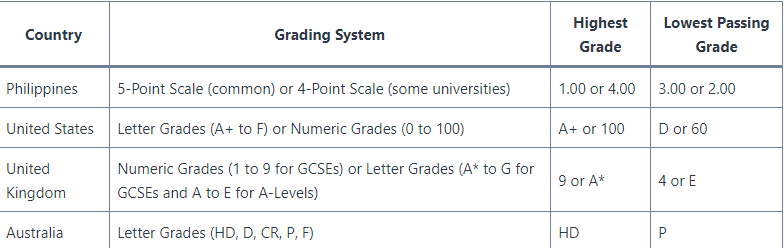
The UK university grading system is designed to assess the academic performance of a student and give grades or categories based on that. Contrary to the percentage-based systems adopted by many other countries, the UK has degree classification for undergraduate and grading scale for postgraduate programs.

Undergraduate Degree Classifications

UK typically follows a classification system to show the quality of Student’s academic performance. This system includes the following pattern:

1. First-Class Honours (First)

  • Grade Range: 70% and above
  • Description: Being First is the Highest academic distinction and portrays an exceptional understanding of the subject.
  • Achieving a First can enhance job prospects or opportunities for the Future.

2. Upper Second-Class Honours (2:1)

  • Grade Range: 60% – 69%.
  • Description: Commonly referred to as a “2:1”, this division indicates a strong performance and is often the minimum requirement for enrollment into demanding job markets or postgraduate programs.

3. Lower Second-Class Honours (2:2)

  • Grade Range: 50% – %59%
  • Description: A 2:2 is considered a satisfactory grade but getting this grade may limit certain professional and academic opportunities.

4. Third-Class Honours (Third)

  • Grade Range: 40% – 49%
  • Description: This is the least requirement for passing an undergraduate degree.

5. Fail

  • Grade Range: Below 40%.
  • Description: Scoring below 40% is considered to fail which means failing to meet the minimum academic requirements and do not receive a degree.

Postgraduate Grading System

Postgraduate degrees use a different system, focusing on the overall quality. Classification Include:

1. Distinction

  • Grade Range: 70% and above.
  • Description: A Distinction means excellent academic performance and is often required for pursing doctoral Studies.

2. Merit

  • Grade Range: 60% – 69%.
  • Description: Achieving a Merit indicates a high standard of understanding in the subject

3. Pass

  • Grade Range: 50% – 59%.
  • Description: A Pass reflects scoring an average mark just enough to complete the program’s requirement.

4. Fail

  • Grade Range: Below 50%.
  • Description: Failed to meet the program’s requirements.

6 Unique Features of University Grading System in UK

  • Percentage to Letter Grades
  • Subjectivity in Marketing
  • Modular System
  • Weighted Assessments
  • Cumulative Grading Approach
  • Independent Learning

Comparing UK Grading to Other Countries

  • United States: They use GPA (Grade Point Average), with a 4.0 being the highest.
  • India: Percentages are used, with 70% or higher typically considered First Division. However, they have now begun to use GPA similarly to the U.S.
  • European Union: Many EU nations use the ECTS (European Credit Transfer & Accumulation System), which assigns grades like A, B,C, and so on.

Challenges

1. Adjusting to Critical Thinking

  • UK universities focus on independent thought and analysis.

2. Understanding Marking Criteria

  • Grading can be confusing at first.

3. Coping with High Standards

  • Achieving excellent grades such as First or Distinction requires handwork and consistent excellence.

Solutions

  1. Getting used to academic resources.

  2. Practicing Analytical Skills

  3. Seeking Feedback

  4. Consulting Professors

  5. Time Management

  6. Utilize Leverage Support Services

  7. Use Proofreading Services

  8. Increase your Networking

  9. Apply for Scholarship

Tips for Excelling in the UK Grading System

1. Understand The Evaluation Criteria

  • Review the marking rubric provided by your university.

2. Focus On Critical Thinking

  • Go beyond, not just summarize the information rather analyze and critique it.

3. Seeking Feedback

  • Regularly consult respective professors and tutors for constructive feedback.

4. Manage Time Effectively

  • Balance Assignments, exam preparation, and extracurricular.

5. Use Resources

  • Take advantage of the library materials, writing centers, and online resources.

FAQs

Q: What is a good grade in the UK?

  • A score of 70% or above is considered a good grade in UK.

Q: How many grades should I obtain to pass in the UK?

  • A minimum of 40% is required for passing grades for undergraduate courses However, it may not be enough for career requirements.

Q: How are group projects graded in the UK?

  • They are based on both individual contributions and overall group performance, ensuring fairness.

Q; What happens if I fail?

  • Many universities allow students to take the exam again but the retakes are limited.

The University Grading System in the UKThe UK’s demanding yet rewarding university grading system is intended to push students and get them ready for success in both the classroom and the workplace. Gaining an understanding of the categories, percentages, and subtleties of grading will enable you to succeed academically.

Understanding this system is essential for making wise selections, whether you’re an employer assessing UK graduates or an overseas student wishing to study in the country.

Top 10 international schools in Philippines 2024

10 Best International Schools in the Philippines 2024

The Philippines, officially the Republic of the Philippines, is an archipelagic country in Southeast Asia with more than 7,000 islands and islets lying about 500 miles (800 km) off the coast of Vietnam.

It is a country of a lively blend of cultures, offering quality knowledge through their best academic heritages in a worldwide competitive environment.

This country is famous for international schools among immigrants and locals for their wide curriculum. quality facilities, and focus on hospitality. So, if you are searching for the best international schools in Philippines in 2024, this article has you covered.

Why Choose an International School in the Philippines?

1. Worldwide Known Programs                                                                                Curricula like The International Baccalaureate (IB), International General Certificate of Secondary Education (IGCSE), American curriculums, etc are available in the International Schools in Philippines assuring students quality education and prepare them for higher education globally.

2. Diverse Environment                                                                                      The schools in the Philippines believe in Unity in Diversity which is one of the key factors to attract students from all around the world with diverse backgrounds. Other factors in attracting students globally are by fostering cultural awareness and global perspectives.

3. Top-Class Facilities 

Well-groomed school facilities can lead to higher academic achievements and reduce stressful scenarios for teachers and staff. From state-of-the-art labs to expensive sports facilities, these schools prioritize both academic and extracurricular excellence.

Top 10 International Schools in the Philippines 2024

1. International School Manila (ISM)

Location: Bonifacio Global City, Taguig

Curriculum: IB, American Curriculum

International School Manila (ISM) in Taguig City, the Philippines stands upheld in esteem as one school following the North American curriculum and accredited by the Council of International Schools (CIS) and the Western Association of Schools and Colleges (WASC).

ISM pressures academic excellence, cultural diversity, and the highest development of students while providing good sporting facilities and a plethora of other activities.International School Manila

Key Feature:

  • Programs: North American with IB Diploma offered in high school.
  • Facilities: State-of-the-art-aсience laboratories, computer laboratories, athletic fields, libraries, and an amphitheater.
  • Student Body: Diverse, with children from more than 80 nationalities.

Annual Fees:

The Annual Tuition Fees for the academic year 2024/2025 are approximately:

  • Elementary School (Kindergarten-Grade 5): PHP 450,000 – PHP 1.2 Million (USD 7,785 – USD 20,772)
  • Middle School (Grades 6-8): PHP 1.3 Million (USD 22,490)
  • High School (Grades 9-12): PHP 1.4 Million (USD 24,242)

These fees include tuition but may exclude extra expenses like admission fees, technology fees, and extra activities expenses. For more detailed information, visit the official website https://www.ismanila.org

2. British School Manila (BSM)

Location: Bonifacio Global City, Taguig

Curriculum: British (IGCSE, A-Levels)

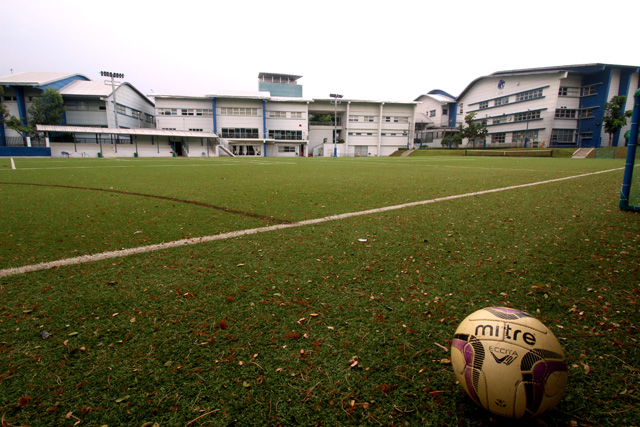
British School Manila is an international school that operates in Bonifacio Global City, Taguig, Metro Manila. The school is open to students aged 3 to 18 years and conducts its curriculum based on the British system.

It takes Year 12 and Year 13 exams that grant the International Baccalaureate the school’s curricular demands are pretty high on small-sized classrooms, then deriving strength on student support and well-being.

It welcomes a highly heterogeneous community, with its student body consisting of over 50 nationalities.British School Manila
Key Features:

1. Programs: 

  • Provides a British-based curriculum from the Early Years Foundation Stage (EYFS) to year 13.
  • The previous year focus on the International Baccalaureate (IB) Diploma, with global recognition, ultimately fitting for university preparations.

2.  Diverse Community: 

  • BSM provides service for a multinational student body with over 50+ nationalities, evolving into a culturally inclusive environment.

3. Small Class Sizes: 

  • Focuses on individual attention with smaller class sizes to ensure personalized learning and student support.

4. State-of-the-Art Facilities:

  • Involves Modern Classrooms, sports facilities, IT and Science labs, libraries, and arts space to develop both academic and extracurricular activities.

5. Student Support and Well-being: 

  • Provides vast support for student well-being, providing academic counseling, mental health resources, and a transition program for new students and their families.

6. Strong Parental Involvement:

  • Features an active Parent-Teacher Association (PTA) to build a strong school community and engage parents in school activities/ events.

Annual Fees:

The tuition fees at BSM for the 2024/2025 academic year vary by grade level:

  • Nursery to Year 2: Approx. PHP 600,000- 900,000 annually (USD 10,380- USD 15,570)
  • Year 3 to Year 9: Approx. PHP 1,000,000+  (USD 17,300)
  • YEAR 10 to Year 13: Approx. PHP 1,300,00+ (USD 22,490)

For more detailed information, visit the https://www.britishschoolmanila.org

3. Brent International School Manila

Location: Binan, Laguna

Curriculum: American (AP, IB)

Expat families love Brent International School because of its inclusion and reputation for academic excellence. It offers various Advanced Placement (AP) and International Baccalaureate (IB) programs.Brent International School Manila

Key Features:

  • General advice for college applications
  • Incarnations of different cultures
  • Sports Programs of prestige

Annual Fee:

  • Early Childhood (Pre-Kindergarten to Kindergarten): PHP 439,000 – PHP 700,000. (USD 7,589- USD 12,110)
  • Elementary School (Grades 1-5): Approx. PHP 700,000 – PHP 900,000. (USD 12,110- USD 15,570)
  • Middle School (Grade 6-8): PHP 900,000- PHP 1,000,000. (USD 15,570- USD 17,300)
  • High School (Grades 9-12): PHP 1,000,000- PHP 1,038,000 (USD 17,300- USD 17,951)

For more specific details, please visit the website brent

4. Singapore School Manila (SSM)

Location: Aseana City, Paranaque

Curriculum: Singaporean, IB

Singapore School Manila maintains its organizational charter from Singapore within the borders of the Philippines.

It is a says: an International Baccalaureate (IB) World School, IB program, and offers Preschool to Pre-University level education. SSM leads children from a very early age to grow into globally minded students with a sound academic foundation.Singapore School Manila

Key Features:

Curriculum: It blends the Singaporean and international education systems, including the IB Diploma Program.

Student Body: A diverse mix of students, thereby offering a global learning experience.

Facilities: Modern classrooms, science and computer laboratories, rooms meant for music and arts, sports facilities, and much more.

Accreditations: Recognized by the Department of Education (Philippines), accredited by Cambridge, and authorized by the International Baccalaureate (IB).

Extracurricular Activities: Includes music, sports (Taekwondo and football), performing arts, and other activities.

Class Hours: Vary according to education levels.

Annual Fees:

  • Preschool (Nursery to Kindergarten): PHP 190,000 – PHP 240,000 (approx. USD 3,500 – USD 4,300)
  • Elementary School (Grades 1–5): PHP 240,000 – PHP 300,000 (approx. USD 4,300 – USD 5,400)
  • Middle School (Grades 6–8): PHP 300,000 – PHP 350,000 (approx. USD 5,400 – USD 6,300)
  • High School (Grades 9–12): PHP 350,000 – PHP 360,000 (approx. USD 6,300 – USD 6,500)

For more specific information, please visit the official website https://singaporeschools.ph/singapore-school-manila

5. Southville International School and Colleges (SISC)

Location: Las Pinas

Curriculum: IB, American

SISC is highly regarded for its bold educational foundation and focus on leadership development. This school integrates the Different Intelligence Framework into its teaching approach.Southville International School and Colleges

Key Features:

  • IB World School
  • Career and University Readiness Programs
  • Focus on student-centered learning

Annual Fees:

  • Kindergarten:

PHP 200,000 – PHP 350,000
USD 3,460 – USD 6,050 (approx.)

  • Elementary School (Grades 1-6):

PHP 400,000 – PHP 550,000
USD 6,950 – USD 9,600 (approx.)

  • Junior High School (Grades 7-10):

PHP 500,000 – PHP 650,000
USD 8,690 – USD 11,250 (approx.)

  • Senior High School (Grades 11-12):

PHP 650,000 – PHP 750,000
USD 11,250 – USD 13,000 (approx.)

  • College (Undergraduate Programs):

PHP 100,000 – PHP 120,000 per year
USD 1,730 – USD 2,080 per year (approx.)

For more specific details, visit the official site https://www.southville.edu.ph

6. Cebu International School (CIS)

Location: Cebu City

Curriculum: IB

As the premier international school in Cebu, CIS caters to families in the Visayas region. The school is known for its tight-knit community and robust IB curriculum.Cebu International School

Key Features:

  • Holistic development programs
  • Diverse extracurricular options
  • Emphasis on community service

Annual Tuition Fees:

  • Preschool:

USD 9,750 (approx. PHP 565,000)

  • Grades 1–12:

USD 14,250 – USD 24,970
PHP 825,000 – PHP 1,445,000 (approx.)

  • Boarding Fees (Grades 6-12):

USD 11,600 – USD 12,500
PHP 670,000 – PHP 725,000 (approx.)

7. German European School Manila (GESM)

Location: Paranaque City

Curriculum: German (Abitur), IB

GESM is the best choice for families looking for European-style education in the Philippines. The curriculum offers bilingual programs and an easy transition to universities in Europe and elsewhere.German European School Manila

Key Features: 

  • Dual diploma options: IB and German Abitur
  • Comprehensive language support programs
  • Strong arts and music department

Annual Tuition Fees:

  • Early Childhood (Kindergarten):

PHP 347,000 – PHP 490,000
USD 6,000 – USD 8,500 (approx.)

  • Elementary:

PHP 440,000 – PHP 620,000
USD 7,600 – USD 10,700 (approx.)

  • Secondary (Grades 7-12):

PHP 620,000 – PHP 949,000
USD 10,700 – USD 16,400 (approx.)

For more specific information, please visit the official website: https://www.gesm.org

8. The Beacon Academy

Location: Binan, Laguna

Curriculum: IB

The Beacon Academy, situated in Biñan, Laguna, is clearly one of the most unique and progressive schools because of its IB Diploma Programme. It is known to foster an atmosphere that encourages students to take full ownership of their learning journey, thus giving them a chance for academic, social, and emotional growth. Herein lies a detailed look at what characterizes The Beacon Academy with regard to teaching methodologies and individual learning experiences.The Beacon Academy

Key Features:

  • For its secondary school students (Grades 7–12), The Beacon Academy uses the International Baccalaureate (IB) curriculum.
  • Fully accredited by the Council of International Schools (CIS)
  • The school has state-of-the-art classrooms, science labs, a sports complex, and a campus that fosters technical and creative advancement.
  • Provides a range of extracurricular activities, including clubs, athletics, the arts, and volunteer work.

Annual Tuition fees:

  • Grade 7-8 (Middle School):

PHP: Approximately PHP 510,000 to PHP 570,000
USD: Approximately $9,200–$10,200

  • Grade 9-10 (High School):

PHP: Approximately PHP 570,000 to PHP 630,000
USD: Approximately $10,200–$11,300

  • Grade 11-12 (IB Program):

PHP: Approximately PHP 630,000 to PHP 700,000
USD: Approximately $11,300–$12,600

For more specific details, visit the official website: https://www.beaconacademy.ph

9. Lecole Francaise de Manille (French School Manila)

Location: Paranaque City

Curriculum: French, IB

French School Manila offers two programs for their students in their final years of high school. Students can choose between the French Baccalauréat and the International Baccalaureate (IB). Both these programs are prestigious and recognized worldwide; each boasts programs of excellence through which students are prepared therefore for university education.Lecole Francaise de Manille

Key Features:

  • Curriculum with international possibilities and a French foundation. In addition to other foreign certificates, students can take the French Baccalaureate, which is equivalent to a high school diploma.
  • The school caters to a wide range of international pupils, with a particular emphasis on the French-speaking expat population.
  • English is a second language, and French is the primary language. Other languages, like Spanish, are also taught at the institution.
  • Classrooms, science labs, art studios, sports facilities, and libraries are examples of contemporary educational facilities.

Annual Fees:

  • Early Childhood (Kindergarten): PHP 347,000 to PHP 490,000 (~ USD 6,000 to USD 8,200)
  • Elementary (Grades 1–6): PHP 440,000 to PHP 620,000 (~ USD 7,500 to USD 10,500)
  • Secondary (Grades 7–12): PHP 620,000 to PHP 949,000 (~ USD 10,500 to USD 16,200)

For more detailed and up-to-date information, visit the website https://www.lfmanille.ph

10. Reedley International School

Location: Pasig City

Curriculum: American

Reedley International School is known for its warm environment and community service orientation. The school is quite unique in that it offers admission to students, coming from a range of backgrounds.Reedley International School

Key Features:

  • Reedley blends Singapore’s national math and science curriculum with the McREL humanities curriculum (USA).​
  • Smaller class sizes (16–30 students per class) are maintained at the school, encouraging more individualized instruction and greater attention to each.
  • Students can take part in clubs and activities after school that offer chances for skill development and personal improvement.
  • Reedley makes it easier for students to commute by providing a school bus service.
  • A top-notch education is guaranteed by the school’s membership in the Council of International Schools (CIS) and accreditation from the Western Association of Schools and Colleges (WASC).

Annual Fees:

  • PHP 171,360 to PHP 333,760 (based on grade level)​
  • USD 3,000 to USD 5,800 (approximate, depending on exchange rates).

Foreign students may be required to pay additional costs, such as PHP 8,500 to PHP 13,000 for the Special Study Permit (SSP).

For further details, visit the official website https://reedleyschool.edu.ph

Conclusion

To summarize, these 10 international schools offer wonderful advantages for those looking for quality education in one of the most colorful, culturally diverse nations in the world. Ingrained in the values of mastery, personal development, and intercultural appreciation, they are among the few institutions offering internationally reputed programs, such as the American system, IB, and IGCSE. These schools lay a foundation for local as well as international families who want to provide a rich and well-rounded education to their children but with emphasis on holistic development, modern teaching, and putting children in a position to thrive in a globalized society.


Is Germany Good for International Students? Discover

Germany is known for its systematic approach to education. From primary schooling to higher education, the system prioritizes discipline, academic achievements, and practical knowledge rather than theoretical. But Is German Good for International Students? Government Universities in Germany are tuition-free for the country’s major population including immigrants, making the universities in Germany an attractive option for those on a fixed budget. Let’s dive into this topic, exploring various aspects and helping you make an informed decision about whether Is German Good for International Students.germanylifestyle

Why Germany?

1. World-Class Education System:

German higher education institutions are among the oldest universities on Earth, with the most popular ones being Heidelberg University, Ludwig Maximilian University of Munich, and Technical University of Munich. German universities get consorted to a place apart in many ranks for their research, multidisciplinary focus, and practical aspects.

Key Features

  • Public universities in Germany provide free higher education to both domestic and international students, with only a semester contribution of a very small amount.
  • Germany leads the world in research, especially within fields such as engineering, medicine, and natural sciences.
  • Education is also accessible to international students by many universities offering many courses in English for those who do not know German.

2. Affordable Living Costs

Germany is adjustable in terms of living expenses compared to other nations for students.

  • Living costs can vary erratically within a range of €250-€400 per month for shared apartments (WG) or dormitories.
  • The reduced price for transportation allows students to travel within the city or transport within the region.
  • To survive in Germany small portion of money is enough based on the city.

3. Employment

As per German government rule a student can only work for 20 hours a week However during the holidays, they can work full-time.

  • Although, having permission to work 20 hours weekly students choose to work part-time jobs to balance academic activities and work.
  • After a certain period, student can apply for 18-month Working visa.

4. Diversity

There are many students from different backgrounds currently studying in Germany.

  • Students can learn about the different cultures, traditions, and visions of the people in Germany.
  • Germany has a low crime rate and also a welcoming environment which makes it a safe place for learners.

Challenges

As Germany provides various opportunities and benefits, there are some common challenges that international students should be aware of:

  • Language Barrier
  • Bureaucratic Process
  • High Competition for Enrollment
  • Cultural Adjustment
  • Finding Affordable Accommodation
  • Adapting to New System

Solutions

  • Taking a German language class before can significantly improve your experience.
  • Pre-planing and seeking help from student support services can ease this process.
  • Strengthen the application with a well-written motivation letter and with strong academic records.
  •  Attain all the events interact with fellow students and expand your network.
  • Start searching for accommodation right after you get admission.
  • Familiarize yourself with the grading and evaluation methods before the semester begins.

Top Universities for International Students in Germany

  1. Technical University of Munich (TUM)
  2. Heidelberg University
  3. RWTH Aachen University
  4. Ludwig Maximilian University of Munich (LMU)
  5. Humboldt University of Berlin

Popular Courses for International Students in Germany

  1. Engineering and Technology
  2. Medicine and Life Sciences
  3. Business and Economics
  4. Arts and Humanities

internationalstudent

FAQs

How easy is it to get a student visa for Germany?

  • Getting a student visa is simple if you have the right paperwork, but the procedure can take some time.

Is the German language necessary to study in Germany?

  • Proficiency in English is sufficient for programs taught in English. Nonetheless, proficiency in German can improve your experience and employment opportunities.

What are the expenses for students in Germany?

  • With housing, food, and other costs included, students often spend fifteen hundred euros a month.

Can I stay in Germany after graduation?

  • Yes, foreign graduates who wish to work in their field of study may apply for an 18-month working visa.

So, is Germany good for international students? The answer is a hearty yes but with some caution. Germany is known for its systematic approach to education. From primary schooling to higher education, the system prioritizes discipline, academic achievements, and practical knowledge rather than theoretical. What makes it special is the availability of English-taught programs.

Germany’s reputation as a hub for education, research, and innovation continues to grow, making it a beacon for students worldwide. So, if you’re considering studying abroad, Germany might just be the perfect place for you!

Education Rankings by Country 2024

Empowerment, economic progress, innovation, and societal development are all based on education. In their endeavor to enhance their respective educational systems, countries should thoroughly refer to the Global Education Rankings by Country 2024, which provides useful insights into how well each nation performs and indicators thereof.  This article will discuss the rankings for education according to quality, accessibility, infrastructure, and results, providing educators and students with an analysis supported by experts.educationranking

Why does Ranking Matter?

  • Identify Strengths and Weaknesses: Nations can know areas needing improvement.
  • Healthy Competition: The Nation aims to improve its ranks via policies.
  • Guide Students and Educators: Rankings help students select the best institution for their education while guiding educators on global standards.

Factors Influencing Education Rankings

  • Literacy Rates: The percentage of the population who can read and write over 15 years old.
  • Quality of Curriculum: The curriculum focuses on innovation, technology, and inclusive education.
  • Equity and Accessibility: Education is available to disempowered communities.
  • Research Output: Publications and innovations from academic institutions in higher education.

Top 10 Countries In Education Rankings By Country 2024

Education Ranking by country 2024

1. Finland

  • Excellent education and Finland go hand in hand. It adopts a comprehensive approach to education, emphasizing play-based learning, minimal homework, and highly qualified teachers.
  • All levels of education are free, accessible, and of high quality.
  • High levels of student happiness and literacy.

2. Singapore

  • Singapore’s students can do exceptionally well in international benchmarking evaluations owing to its strict curriculum with an emphasis on math and science.
  • The provision of strong foundational skills is another distinctive feature given the criticality of early learning.
  • Regularly tops PISA rankings.

3. United States

  • Well-known for its educational system with world-class universities.
  • Various aspects of the education system are catered for, including different pedagogical approaches.
  •  Contributes significantly to worldwide research and innovating capacities.

4. United Kingdom

  • Global institutions like Cambridge and Oxford are located in this region.
  • Emphasizing humanities, especially in the study of research-oriented programs.
  • International students and diversity in education.

5. Australia

  • Australia exhibits an effective and inclusive primary and tertiary education system.
  • Skills-based learning and vocational education would very much be encouraged.
  • It’s one of the preferred destinations for foreign students.

6. Canada

  • High accessibility to education with significant investment from the government.
  • Multicultural classrooms foster inclusivity.
  • High literacy rates and progressive policies.

7. Germany

  • Free or low-cost higher education and strong vocational training programs.
  • A dual education system with theoretical and practical integration.
  • Lead in the STEM fields.

8. Japan

  • Very dedicated to discipline, integration of technology, and STEM.
  • Digital tools in the classroom.
  • World-leading in mathematics and science.

9. South Korea

  • Renowned for its tough system and parental involvement.
  • Secondary private tutoring and university entrance exam competitiveness.
  • Great success in international assessments.

10. Switzerland

  • Dual system academic and vocational training.
  • High investment in teacher training and its infrastructure.
  • Very high figures in respect of employment of the graduates.

Emerging Trends World Education

  1. Technology Integration
  2. Focus on Equity
  3. Sustainability in Education
  4. Skill-Based Learning
  5. Personalized Learning
  6. Mental Health Awareness
  7. Bilingual and Multilingual Education
  8. STEM Education Emphasis
  9. Global Citizenship Education
  10. Lifelong Learning Programs

Challenges in Achieving Global Education Excellence

  1. Funding Gaps: Developing countries usually have a very limited budget.
  2. Digital Divide: Unequal access to technology causes low progress in remote areas.
  3. Teacher Shortages: Like many others, high attrition influenced the quality of education.
  4. Political Instability: This kind of conflict disrupts education in many regions.
  5. Cultural Barriers: In some regions, traditional beliefs and societal norms limit access to education for girls and marginalized groups, thus leading to systemic inequalities that are either direct or hard-to-overcome paths to education.
  6. Language Barriers: Multilingual countries or many immigrant groups suffer such a burden of incompetence due to lack of language support making them unable to fully participate in learning and stand a real chance of reaching their potential.

Recommendation for Improving Global Education Rankings

  • Policy Reforms: Give precedence to teacher training, curriculum changes, and infrastructural adjustments.
  • Technology Integration: Use technology to enhance the accessibility of education.
  • International Collaboration: Exchange experiences and resources.
  • Focus on Lifelong Learning: Encourage education and skill development throughout one’s life.

Country Education Rankings 2024 highlights the global education landscape, showing how advanced countries like Finland and Singapore set the standard while developing countries improve through innovation and reform. The world needs to tackle the challenges and seize opportunities to work towards an education system that is fair, equitable, and effective for all.

Policymakers, educators, and students should keep tabs on the world’s rankings to guarantee they are always in the know regarding educational excellence.

Is German Education better than America?

Looking out to pursue your education, well Germany and the United States are both usually the most popular destinations. Both country offers a unique educational experience, diversity, economy, and academic quality.

I’ve been introduced to both systems, therefore I’ll be helping you answer the crucial question: Is American education inferior to German education?usaandgermanyWe’ll talk about the main distinctions, advantages, and difficulties in a number of categories in this post, including overall experience, opportunities, cost, and educational quality. When it comes to pursuing an education, the two most preferred countries are often Germany and the United States. So, let find out Is German Education better than America?



Educational Philosophies: Germany vs. America

Germany: Structured and Disciplined

Germany is known for its systematic approach to education. From primary schooling to higher education, the system prioritizes discipline, academic achievements, and practical knowledge rather than theoretical. Government Universities in Germany are tuition-free for the country’s major population including immigrants, making the universities in Germany an attractive option for those on a fixed budget.educationgermany

Key Features

  • Quality Degree with a strong focus on important subjects.
  • Focuses on research and technical fields.
  • Dual Education System

America: Flexible and Diverse

The U.S. education system is proud of its academic quality because of its flexibility and broad-based learning. The freedom for learners to explore different subjects before committing to a major is a huge plus point. This unique nature aligns well with those who value creativity and diverse education.usaeducationsystem

Key Features

  • An open-minded arts approach at undergraduate levels, allowing students to test multiple disciplines.
  • Diverse public and private institutions catering needs and interests of students.
  • Access to cutting-edge technology.

Comparisons: German Vs American Education

1. Higher Education Fee

  • Germany: Tuition-free for public universities, with students paying only enrolling fees which are around €200-€300 per semester.
  • America: Tuition fees can range from $10,000 to over $50,000 annually, depending on the institution.

2. Quality of Education

  • Germany: It has some of the ancient and most renowned universities. Degrees received from Germany are highly respected globally.
  • America: The U.S. has top universities like Harvard, MIT, and Stanford. Depending on the university, academic quality might vary greatly, however, prestigious universities are ranked highest worldwide.

3. Student Experience

  • Germany: Student life in Germany is often described as academically focused with less focus on universities culture. However, students love their city life, travel opportunities within Europe, and exposure to a multicultural environment.
  • America: They focus more on extracurricular activities, sports, and university events rather than focusing entirely on academic brilliance. Dorm Life and Student Organizations create a strong sense of community.

4. Language and Accessibility

  • Germany: Although German is the medium of instruction in many programs, especially at the master’s level, knowledge of German is required in everyday life and is essential for several job-seeking opportunities.
  • America: English is a global language, used and understood all over the world.

5. Employment Possibilities

  • Germany: The dual education system prepares students for specific industries, ensuring they are job-ready. Good job prospects are offered in Germany by its strong economy, particularly in engineering and manufacturing.
  • America: They provide internships, unique career, and networking opportunities which play a vital role in serving the real world.

Pros and Cons of Studying in Germany

Pros: 

  1. Tutuion-free education.
  2. Top-notch technical and STEM programs.
  3. Exposure to European culture and travel
  4. Focuses on Practical Knowledge rather than theoretical knowledge.

Cons:

  1. Language Barrier for International Students.
  2. Less focus on Extracurricular activities.
  3. Tough paperwork, especially for visa and residency.

Pros and Cons of Studying in America

Pros: 

  1. Access to world-class institutions.
  2. Academic flexibility.
  3. Strong networking opportunities.

Cons: 

  1. High Annual fees.
  2. Competitive admission process.
  3. Expensive Lifestyle.

Having discussed all the above articles, the choice of choosing a specific country for education depends on personal and professional goals. The precision and technical depth in Germany have amazed everyone globally. It is especially appealing to students who prefer a practical, no-frills education that prepares them directly for their careers.

On the other hand, the American system stands an excellent chance for success as it allows multiple opportunities for academic flexibility, variety in courses, and a fully mature learning experience. For students who wish to express themselves, combine their work, and have an open mind with various career choices, American colleges perfectly fit their needs due to their relative ease of admission.

The US Grading System: Key Facts You Should Know About

In this article, we will discuss about US Grading System, please stay reading till the end. The United States of America is a federal union of 50 states and has its capital as Washington, D.C., considered to have one of the finest Academic Faculty.

The US Education System promises flexibility, diversity, and an abundance of academic and personal opportunities.usa grading systemKey elements in the U.S. grading system consist of an overall structure of grading, extremely important during the assessment and evaluation process for the advancement of student performance.



Whether you are an immigrant, a parent, or somebody interested in academic life in the U.S., this understanding of The US Grading System: Key Facts You Should Know About is important.

As I have many cousins residing in the USA who studied and faced this very system, we often talk about how good the grading system is in the U.S. After my Bachelor’s, I have also decided to go to the US to join my cousins there.

So, I collected enough information on the US academic sector and its grading system. The below blog will help you decode the US grading system and how good it is compared to other systems in the world. Let’s dive in.

US Grading System

The US Grading System is a format used by various universities, schools, and colleges to enable students and their teachers to rank academic performance. It provides an authentic way of calculating knowledge possession, skills, and academic progress.

At its roots, the system makes use of grades like A, B, C, and D, often replaced by percentage or GPA. This form grants transparency and equality, so the institution can observe the achievements on an academic basis.grading system in usa

Key Facts

1. Letter Grades: The Foundation

• A (90-100%) represents Excellent Performance
• B (80-89%) – above average
• C – average understanding – 70-79%
• D- passing Below Average: 70-79%.
• F (Below 60%) failure.
These letter grades make evaluation easier and are the same for all academic institutions in the U.S.

2. GPA(Grade Point Average): The standard

• 4.0: Equal to an A, excellent result
• 3.0-3.9: Stands for B, above average result
• 2.0-2.9: Represents C, an average result
• Below 2.0: Need Improvement

3. The Role of Percentages

While letter grades dominate, the percentages are mainly used to give this grade. For instance, an 86% score corresponds to a B+ or 3.3 GPA grade. However, the grading scale could vary from one organization to the other

Characteristics of the US Grading System

1. Flexibility
The system allows students for course re-takes or to improve grades.

2. Subjective Evaluation
Grading normally entails attendance, and project assignments, and therefore presents an all-round picture of student capability.

3. Grading Policies
Policies vary in institutions or individual Teachers hence in admission to class has to address particular criteria.
Effects of Grading System

Effects of Grading System

1. Academic Excellence

  • The grade determines Scholarships, internship opportunities further studies.
  • The higher the GPAs, the Higher the caliber of universities that students gain acceptance into.

2. Mental Health

  • It is more about a methodology that inspires pupils to perform well but at considerably heightens anxiety and tension both for students and their parents on how to take up the performance.
  • Balance between studies and extracurriculars.

3. Skill Development

  • Students can develop their critical thinking, teamwork, and communication skills if they are all allowed to track their academic progress.

Comparison Between Grading Systems

[a] US vs UK Grading System

  • UK: Grades are given in percentages and class divisions. For example, First-Class: 70% +
  • US: Grades given as letter Grades, for example, A, B, C, GPA on a 4.0 scale.

[b] US vs European Grading System

  • Europe: Makes use of ECT with either a 10-point or 20-point scale
  • US: makes use of letter grades for example, A, B, C, and GPA on a 4.0 Scale.

[c] US vs Asian Grading Systems

  • Asia: Primarily uses a percentage-based system with strict grading scales
  • US: Uses letter grades (A, B, C) and GPA on a 4.0 scale.

Tips For Excelling in the US Grading System

  • Understand the Criteria
  • Maintain Consistency
  • Asking Help
  • Strike a Balance Between Academic and Non-Academic Activities Extracurricular

grading system in us

FAQs

1. Is it possible to transfer grades from another country to the US system?

  • The system is very broad in patching these by integrating other evaluative factors so that students can develop their critical thinking, teamwork, and communication skills.

2. How important is the GPA in the United States?

  • There is no denying the importance of GPA for college admissions, scholarships, and job opportunities. However, a thorough evaluation often considers extracurricular activities and the substance of personal statements.

3. What if I fail a class?

  • Yes, failing a class does bring down your GPA, but most schools offer retakes in an attempt to raise those grades. Yet the true causes of your academic difficulties must be faced.

4. Do all schools use the same grading system?

  • No, different instructors and schools may have their own sets of guidelines. Be certain to review the course-specific rules.

The US Grading System: Key Facts You Should Know About provides insight into one of the most important features of American schooling. The structure and flexibility of this model of learning a way to cultivate scholars are complex at face value but less intimidating once one learns about letter grades, GPAs, and processes of evaluation.

My dealing with this system changed my life for good, each transition from school to university arming me not only with academic knowledge but also with life-enabling skills. All that is important, whether you plan to study in the USA or send someone, is knowing the ins and outs of the grading system to allow for a smoother academic shift.

Understanding the U.S. grading system is the master key to getting many of those study opportunities.

How to Send College Transcripts Electronically?

In this article gwacalculator.ph discuss the topic “How to Send College Transcripts Electronically?”

As the world is evolving digitally, sending college transcripts electronically has become an important educational and professional process factor.

Whether you are pursuing your further studies, employment, or changing schools, electronic transcripts make the process easier.

A few years back, when my friends proceeded to gain my transcript, I knew about the steps that should be followed to receive our transcript smoothly.

This very article holds firsthand information about how to send college transcripts electronically.

What is Electronic Transcripts?

An electronic transcript is a digital form of our academic record. Unlike traditional paper transcripts, the records of our educational results are sent digitally, making them accurate, more efficient, and without any delays or errors.College Transcripts ElectronicallyThese types of files are usually sent through secure platforms because they contain the personal details of the particular person. Also, it can be sent directly via email which is also one of the secure platforms.
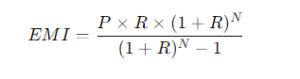
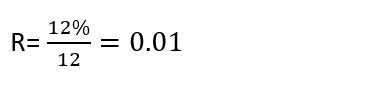

Why Send Transcripts Electronically?

  1. Speed: Physical transcripts often arrive late taking 1 week to 2 weeks however, electronic transcripts can be received within an hour or a day max.
  2. Security: Encrypted Platforms are used to deliver the electronic transcripts because they ensure data safety.
  3. Eco-Friendly: No paper or plastic are used for shipping or other purposes which helps the environment.
  4. Global Access: Electronic Transcript can be accessed worldwide which makes it suitable for institutions and employers.

Steps on How to Send College Transcripts Electronically

1. Confirm the Requirement

  • To receive the Electronic Transcripts specific requirements are needed such as University Name, Registration Number, etc.
  • Prove if they accept electronic transcripts and identify their preferred platforms.

2. Access Your University Portal

  • As most colleges and universities provide a student portal so, Log into your portal where you can find a specific section for transcript requests.
  • Go through the “Transcript Request” section.

3. Choose the Delivery Method

  • From the list of options, choose Electronic Delivery.
  • Certain organizations might want the platform name (e.g., Parchment, National Student Clearinghouse, or eSCRIP-SAFE) or the recipient’s email address.

4. Recipient Details

  • Re-check the recipient’s email address or digital transcript portal details.
  • When sending to a particular institution, use the same address provided by their admissions office.

5. Payment 

  • A certain amount is required to request an electronic transcript which varies by institution.
  • Payments are usually made online through credit/debit cards or by using mobile banking.

6. Review and Submission of Transcript Request

  • Proofread all the information before submitting the request.
  • Confirmation mail or notification should be received after requesting.

7. Tracking

  • Track the status of your transcript and keep an eye on delivery confirmation to ensure it reaches the intended recipient.

Read More: New College Grading System in Philippines 2024


Platforms to Send College Transcripts Electronically

1. Parchment

  • One of the most reliable platforms for secure transcript delivery.
  • Offers Customer Support as well as tracking options.
  • Works with more than thousands of institutions globally.

2. National Student Clearing House

  • A trusted Agent for Electronic Transcript services.
  • Secure and reliable for sending transcripts to Universities

3. eScrip-Safe

4. Credential Solutions

  • User-friendly interface for requesting and delivering transcripts.
  • Offers additional features like digital signature validation.

Challenges & Solution

  • Challenge 1: Recipient Does Not Accept Electronic Transcripts
  • Solution: Select a hybrid distribution option in which the platform provides both an electronic and a hard copy.
  • Challenge 2: Delayed Processing
  • Solution: For updates, get in touch with the platform’s customer support or the registrar’s office at your college.
  • Challenge 3: Incorrect Data
  • Solution: Always Proofread all information before submitting. If you notice some error do not panic rather contact the service provider immediately.

FAQs

1. How much time does it take to send an electronic transcript?

  • Usually, it takes a few hours or one business day, depending on the platform and institution.

2. Can I send my transcript to multiple recipients simultaneously?

  • Yes, many platforms allow you to send transcripts to multiple recipients but they charge an additional fee each time.

3. Are electronic transcripts secure?

  • As they are transferred through encrypted channels, assuring data security.

4. Can I send transcripts internationally?

  • Yes, the very concept of this electronic transcript was to send it internationally so, it is ideal for international recipients as they are faster and eliminate shipping complications.

5. What if my university does not offer electronic transcript delivery?

  • In such cases, you should request your university for a physical copy and use third-party services to digitize and send the transcript.

College transcripts can be sent electronically, which is a quick and easy way to save time and work. You can make sure your transcripts arrive at their destination safely and on time by following this detailed guide. Electronic transcripts make the process easier whether you’re looking for a job, applying to colleges, or getting your credentials evaluated.

The time to take advantage of electronic transcript delivery is now if you’re prepared to advance in your academic or professional career. Keep in mind that your greatest resources for success are thorough preparation and correct information.

How is EMI Calculated for Personal Loan?

How is EMI Calculated for a Personal Loan?

Taking a loan is an important financial decision in a person’s life, and as someone who has gone through that loan period, I understand how significant it is to fully understand the concept of EMIs. So, let’s discuss and learn how is EMI calculated for personal loan.

My journey with personal loans taught me the importance of understanding how monthly payments work to avoid financial stress and maintain physical and mental peace. Let me share my perspective and experience to help you gain detailed information about how EMI and personal loans work and prepare you before making any decisions.

EMI

EMI is the specific or fixed money paid monthly for a certain period of time by a borrower to the lender. This is because while the principal amount repaid increases in each subsequent payment, the interest portion that is paid reduces. However, it has to be paid. Instead of calculating it on your own and spending some time to do so, one can avoid any mistakes and use an EMI calculator. However, all these must have been stated including the loan amount, interest rate as well as the term been specified therein.

When I took my very first loan, I realized how EMIs helped me plan my budget monthly. The breakdown of principal and interest kept changing overtime but the never-changing payment amount made it easier for me to manage my financial and social without any problems.

EMI Calculation

Before applying for my loan, the first thing that came to my mind was to consider my budget and all the expenses that i have and are going to add up in near future. So, i begun to calculate my EMI to assure it fit my budget and wont go out of my limit. Basically, EMI depends on three main factors, they are:

  1. The Loan Amount i.e Principal
  2. The interest rate
  3. The loan Tenure

The formula used to calculate EMIs:

Where,

  • P= Loan Amount (Principal)
  • R= Monthly intrest Rate (Annual Rate Divided by 12)
  • N= Loan tenure in months.

For Example:

I took NPR 10,000,00 at an annual interest rate of 12% over a period of 5 years, this is how I calculated my EMI:

  1. Convert the annual interest rate to a monthly rate:    
  2. Calculate the total number of months:  

3. Put the values into the formula: 

So, by using this process and formula my EMI was approximately NPR 22,244.45. Realizing the amount made me feel the money I should pay monthly is quite manageable based on my monthly income, but taking interest into account made me realize how important it is to select the right loan terms.

Key Insights

1. Knowing Principal and Interest: 

It was surprising at first that the majority of  EMI payments were used to pay the interest. A greater percentage of payment began to go toward principal payments as the amount of principal owed dropped over time. This change was the result of most lenders using the lowering balance strategy.

2. Time Impact on EMI: 

EMI increased dramatically when I thought about a shorter tenure, yet the total interest outflow decreased. However, a longer tenure significantly raised the total amount of interest I paid, but it also made the EMI more affordable. I chose a compromise that struck a balance between expense and affordability.

3. Importance of Down Payment

I prepaid a portion of my loan with every bonus or additional money I earned. By lowering my outstanding principal, I was able to save money on interest and subsequent EMIs. Before using this tactic, I highly advise you to inquire about prepayment fees with your lender.

Common Mistakes To Avoid

  1. Over-loaning
  2. Snubbing Interest Rates:
  3. Ignoring Loan Terms
  4. Rushing the Decision
  5. Not Considering Downpayment
  6. No research on suitable deals
  7. Believing in Rumours.

We now know about planning and financial discipline from taking out a personal loan. At first, EMIs may seem overwhelming, but they can be managed with the right knowledge and preparation. Anyone thinking about taking out a loan should take the time to study their alternatives, comprehend the effects of interest rates and duration, and make use of resources such as EMI calculators.

Even more emphasis on making loan payments on time and obtaining better terms could be clinical for loans. When it comes to debt management, even the smallest effort counts. Recall that while taking out a loan entails responsibility, it can also present an opportunity to reach your financial objectives stress-free if handled properly.

Explore the New GWA Calculator In USA 2024!

New GWA Calculator in USA 2024: Academic Performance Tracking

The New GWA Calculator in USA 2024 is a revolutionary tool which is made to help the students to enhance and simplify the way to calculate and understand General Weighted Average (GWA).

This is customized to match the changing needs of educational establishments in the United States.

What is the New GWA Calculator?

The New GWA Calculator in USA 2024 is a tool that allows students to calculate their academic results more precisely. Unlike commonly used GPA calculators, this tool contemplates course credit hours and course weights, providing a more comprehensive view of student’s attainment.

It lines up with the latest education grading standards and policies carried out in 2024, make it a must used tool for students and instituitons.

9 Key Attributes of GWA Calculator:

1. User-Friendly Interface: Made for clarity, learners can input grades and credits effortlessly.

2. Changeable Grading Scales: Fits to different grading systems used around USA establishments.

3. Live Insights: Offers quick results, allowing students to follow their performance effectively.

4. Connection with Online Portals: Easily connects with the worldwide learning management system (LMS).

5. Customizable Reporting: Generates detailed, tailored reports that students and educators can use to analyze trends in academic performance.

6. Data Security: Employs robust encryption to ensure the safety of personal and academic data.

7. Mobile Compatibility: Fully responsive design, making it accessible on smartphones, tablets, and desktops.

8. Multilingual Support: Offers support for multiple languages, catering to international and diverse user bases.

9. Gamification Features: Incorporates badges, milestones, or other interactive elements to enhance student engagement and motivation

Benefits for Students and Educators

a) Improvised Accuracy: Cancel out manual errors, assuring accurate grade computations.

b) Time-saving: Fast calculations save time during grade evaluations.

c) Goal Setting: Learners can set academic targets based on present performance.

d)Enhanced Transparency: Provides clear insights into grading criteria, ensuring students and educators are on the same page.

e) Better Decision-Making: Empowers students to make informed academic choices and educators to adjust teaching strategies.

f) Increased Engagement: Real-time feedback and analytics keep students motivated to track and improve their performance.

g) Centralized Data Management: Stores all grades and performance data in one secure location, making it easy to access and review.

h) Adaptability: Supports diverse educational needs by accommodating various grading systems and academic structures.

i) Collaborative Learning: Encourages communication between students and educators to address performance gaps and improve outcomes.

Why Choose the New GWA Calculator in USA 2024?

As the grading system in the U.S. continues to develop, the New GWA Calculator in USA 2024 is a dependable solution for directing the changes.

Whether you are a learner aiming for academic honors or a teacher evaluating class performance, this tool assures coherent and accurate results in grade management.

How to Access the Calculator

As this calculator is made for students and educators, the calculator is available on online platforms and can be used via mobile, desktop or any other electronic devices.

Many organizations have already begun to integrate it into their educational system and latest version can be downloaded from official academic software providers.

How to Use the New GWA Calculator

Input Grades: Enter the grades for each course.

Add Credit Units: Comprehend the following credit hours for accurate calculations.

Generate Results: View a detailed breakdown of your GWA and additional insights.

Track Over Time: Save your results for consistent monitoring of each academic year.

Formula to Calculate GWA

GWA=∑i=1n​ui​∑i=1n​(gi​×ui​)​ where,

  • GWA – General weighted average
  • gigi​ – Grade of each course or subject;
  • UI – Units or credits of each course;
  • ii – Index of the summation where its value ranges from i=1i=1, i=2i=2, up to i=ni=n; and
  • nn – Total number of courses considered in the calculation.

For Example:

Let’s say we want to take the general weighted average of the course grades given in the following table:


By following our GWA formula, we know that we have to take the sum of the products of the course grades and their corresponding course units and divide that sum by the total number of course units. In equation form, we express that as shown below:
GWA​=∑i=1n​ui​∑i=1n​(gi​×ui​)​
=(1.00*3)+(1.25*1)+(1.50*5)/ 3+1+5​
=(3.00)+(1.25)+(7.50)/ 9​
=11.75/ 9​
=1.30555
≈1.31
Future Developments
The inventor of the New GWA Calculator in the USA 2024 plans to incorporate characteristics like AI-based results prediction, combination with smart learning devices, and agreement with Augmented reality (AR) tools to further enhance its utility.

FAQS

1. What is the USA 2024 New GWA Calculator?
A sophisticated tool for accurately calculating General Weighted Average (GWA) is the New GWA Calculator. It takes into account course weights, credit hours, and the contemporary grading schemes employed by American universities.

2. How does it differ from a standard GPA calculator?
Unlike a GPA calculator that focuses solely on grades, the GWA calculator considers course credit units and weightage, providing a more comprehensive measure of academic performance.

3. Is the New GWA Calculator compatible with all grading systems?
Yes, it supports multiple grading systems, including the 4.0 GPA scale, percentage grades, and letter-based systems commonly used in the U.S.

4. Is it free to use the calculator?
Even while the basic version is frequently free, some institutional integrations or more sophisticated capabilities could need a one-time fee or membership.

Conclusion

The New GWA Calculator in USA 2024 goes significantly ahead being just a grade calculator, it is a powerful educational tool invented to enhance learning outcomes, empower students, and simplify academic management for organizations.

By embracing this unique solution, both educator and learner can stay forward in the ever-evolving educational landscape.

New College Grading System in Philippines 2024

Knowing the diverse college grading system in Philippines 2024, I can feel the lack of uniformity around the institutions.

As an evolving player in the global academic market, the country employs various aspects of a grading scale that changes significantly depending on the institution.

Some institutions use a 4-point grading scale, whereas others rely on a 5-point grading system, creating a distinctive challenge for both students and educators. This developing method reflects the Philippine’s efforts to refine its education system while adapting to worldwide standards.

In this article, I will share my insights into what students and teachers are required to understand about the new grading systems in 2024.

New College Grading System in Philippines 2024

1. 4-Point Scale

Based on my experience working within educational institutions that rely on a 4-point grading scale, I have seen how this system, modeled after the U.S. framework, assures precision in evaluating student performance.

The scale ranges from 4.00, representing the highest grade, to 0.00 the lowest. Universities like Ateneo de Manila University (ADMU) and the University of the Philippines implement this system carefully, demanding accuracy in allowing academic achievements.

My involvement in advising students within these organizations has provided me a vast understanding of how this scale fosters both clarity and fairness in measuring academic progress.

4-point scale
Caption: Grading System In the Philippines

2. 5-Point Scale

From my experience working with organizations that employ the 5-point grading scale, I have observed its traditional approach to evaluating academic performance.

In this, system, 1.00 represents the highest possible grade while 5.00 is the lowest, with 3.00 serving as the minimum passing mark. Institutions such as the University of Santo Tomas (UST) and Central Luzon State University (CLSU) rely on this scale to assess students’ achievements comprehensively.

Having guided students through understanding and improving their performance within this framework, I’ve gained a deep appreciation for the structure and rigor it brings to academic evaluation.

5-point grading system
Caption: Grading System in the Philippines

Secondary School Grading System in the Philippines

Exposure to a simple 5-mark marking scheme, which is very common in junior high and high school, came as an eye-opener to me.

A minimum passing mark, generally at 2.5 or the “C” range, establishes a clear baseline for academic excellence. As for scores exceeding 90, they signify excellent feats which indicate exceptional effort and understanding.

I have assisted teachers and students in dealing with this criterion, and I have seen how it promotes openness and pushes students toward excellence.

Higher Secondary School Grading System

Having worked alongside the Philippine College Grading System, I find it pragmatic to use both letter and number grades to measure students’ performance at all levels of study.

Designations exist for absences and incompletes meant to address most unique curricular situations in which students find themselves. Each institution determines its definitions for grading, thus providing both the complexity and the latitude.

A closer look at some of these grade calculators shows how tremendously useful they’ve been for students to compute their numeric grades and for them to know where they stand in school.

I have often assisted students in using this type of tool for such work, enabling them to know where they are on their degree path. Additionally, encyclopedic references on standard computing methods, in general, help to bring some clarity to the game and assist students in goal-setting.

Comparing the Philippine Grading System with Other Global Grading Systems

Grading systems in the Philippines and other countries differ in terms of scales, grading criteria, and interpretations. Here we will analyze the grading systems of the Philippines against those of the United States, the United Kingdom, and Australia.

In the Philippines, some universities have a grading system that ranges from 1.00 to 3.00 on a 5-point scale, with 1.00 being the highest and 3.00 being the lowest passing grade. A 4-point scale similar to the one used in the U.S. uses a grading system ranging from a highest of 4.00 to a lowest passing grade of 2.00.

By and large, the United States grade scale is divided into letter grades, starting from A plus all the way to F. A is considered the best, while D is the lowest passing grade.

In some schools, grades are awarded as numbers between 0 and 100, with 100 being the highest grade you can get and 60 as the lowest passing grade.

In the United Kingdom, GCSEs are graded from 1 (lowest) to 9 (highest), with 4 being considered a passing grade. For A levels, a letter grade scale is used, with grades from A-star (highest) to E (lowest).

In Australia, the grading system gives grades such as HD (High Distinction), D (Distinction), CR (Credit), P (Pass), and F (Fail). HD is the highest grade and P is the lowest passing grade.

Overview of Grading Policies in the Philippines

a) Types of Grading Scales:

Philippine universities and colleges run their processes using various grading systems-most common being 5-point (with 1.00 being the highest and 5.00 as failing) and 4-point (4.00 being the highest and 0.00 as failing).

b) Minimum Requirement of Passing Grades:

Under a 5-point system, obtaining a minimum score between 3.00 and 1.00 will be regarded as passing; under a 4-point grading system where a score lower than 1.00 indicates passing status, some schools apply this to 75%.

c) General Weighted Average (GWA):

GWA is a generic term that typically refers to a student’s general final academic performance expressed as the average in the course, and it is heavily weighted in considerations for graduation and retention.

d) Percentage Qualification:

Although percentage equivalents are included in either system in various institutions, these standards regarding large ranges of percentages respond flexibly to evaluate performance; for instance, 96%-100%=1.00 in the 5-point grading scale.

e) Latin Honors Eligibility:

Students with a high GWA stand a chance of being awarded Latin honors-Summa Cum Laude, Magna Cum Laude, or Cum Laude-subject to institutional policies.

f) Conditional Passing:

An INC (for Incomplete) is given to those who did not complete that particular term for some other reasons, and it must be addressed before they can receive a final grade.

g) Incomplete Grades:

Grading systems of all schools shall conform with national policies established by the DepEd or CHED to ensure the regulation of standardization therein.

h) Department of Education (DepEd) Guidelines:

The principle of all grading systems aims toward conformity with national policies promulgated by the Department of Education or Commission on Higher Education so that standardization is achieved.

i) Policies Across Institutions:

A few universities like the University of the Philippines (UP) and De La Salle University (DLSU) might have their unique grading scales or policies that align with their academic standards.

j) Grade Recalculation Options:

Learners have the benefit of retaking courses or petitioning for grade changes; this is especially common for prerequisite courses.

k) Letter Grades:

Some institutions, such as international schools, use letter grades (e.g., A, B, C) with numerical equivalents in line with international practices.

l) Role of Grading Policies in Careers:

Grading standards influence opportunities for scholarships, internships, and jobs, which serves to accentuate the importance of continuous student performance during a person’s period of education.

FAQS


1. What is the DepEd grading scheme?

Many countries including the Philippines, run a ‘standardized’ grading system to evaluate and assess the student’s academic progress, under the Department of Education (DepEd). The grading usually consists of letter grades and numerical equivalents.

2. What does a 1.75 grade mean in Philippine college?

Philippine colleges adopt a grading system that often translates numerical equivalencies for letter grades. A grade of 1.75 generally falls under the category of a Very Good grade. This translates to a grade point equivalence of inconsistently falling between the grades of 89-88%.

3. What does an A+, A, or B+ grade mean?

A+: Exceptional performance, typically 97-100%.
A: Excellent achievement, usually 90-96%.
B+: Very good level of performance, around 87-89%.
Keep in mind that grading scales may vary between institutions

4. Is a D considered a passing grade?

Yes, in most educational setups ‘D’ is considered a range of marks that does not necessitate a repetition of the course. However, the grading policies in various schools are different so it is advised that the students check the grading for passing policies.

5. To pass a class, what grade is necessary?

A: It is a norm that a grade of 60% or higher is deemed to be a passing grade. Consult your institution’s particular grading policies to confirm.

Grading in the Philippines fuses tradition and modernity into one system and offers options for traditional or modern methods of evaluation. The four- and five-point scales are used along with percentage equivalents and General Weighted Averages (GWAs) in the evaluation process, for fairness, flexibility, and compliance with international standards.

Conditional passing, possible recalculation, and eligibility for Latin honors are but a few of the policies that would highlight concerns about support to the student in the academic search for excellence.

The influence of grading systems is not limited to the classroom, but extends to the opportunities available to students, whether in higher education contexts, scholarships, or entry into their future careers.

With Philippine education taking to the stage of global education, grading policies will remain an inimitable byway to a competitive workforce ideally groomed.

What is Cumulative GWA: and Its Importance in Academic Success

In the realm of academic achievement, college students often come across the term “Cumulative GWA” or “Grade Weighted Average.” This article aims to provide a comprehensive understanding of what cumulative GWA is, how it is calculated, its importance, and strategies to improve it. Additionally, it offers guidance on maintaining a balance between academics and personal life.

The GWA Calculator is a valuable tool that simplifies the complex process of computing a student’s Grade Weighted Average. It enhances academic success by aiding college students in managing their cumulative grades effectively and maintaining a healthy balance between studies and personal life.

What is Cumulative GWA

Cumulative GWA is a numerical representation of a student’s overall academic performance. It is a calculation based on the grades obtained in all courses completed throughout a student’s academic journey. This takes into account the credits of each course, providing a comprehensive evaluation of a student’s academic excellence.

Read More: GPA vs. GWA: Exploring GWA and GPA difference

How to Calculate Cumulative GWA

To calculate the cumulative GWA, one must consider the grade points earned in each course and the corresponding credit hours. The formula is as follows:

Cumulative GWA = Σ (Grade Points x Credit Hours) / Σ Credit Hours

The grade points are typically on a scale of 4.0, where A is equivalent to 4.0, B is 3.0, C is 2.0, D is 1.0, and F is 0.0. The total credit hours refer to the sum of all credit hours for completed courses.

Cumulative GWA vs. GWA: What’s the Difference?

Cumulative GWA and GWA are key indicators of a student’s academic performance. But, they serve different purposes. GWA (General Weighted Average) is the average grades earned in a period, like a semester or school year. Multiply each subject’s grade by its units. Then, divide the sum by the total number of units. This gives a focused view of a student’s performance within a set time frame.

In contrast, Cumulative GWA averages all grades earned since a student’s start. It measures their overall academic performance. It includes every completed term. This gives a better view of long-term academic success. GWA is useful for evaluating performance in individual subjects. Cumulative GWA reflects a student’s consistent effort across multiple semesters. Schools often use Cumulative GWA to determine honors and graduation eligibility. It shows sustained academic achievement over time.

If you want the difference between Cumulative Grading System vs. Average Grading System in the Philippines Visit our latest guide on it.

The Importance of Cumulative GWA

Cumulative GWA plays a vital role in a student’s academic journey. Many educational institutions and potential employers use it as a benchmark to assess a student’s dedication, perseverance, and overall academic capabilities. A high cumulative grade not only signifies academic excellence but may also open doors to various opportunities, such as scholarships, internships, and job offers.

Factors Affecting Cumulative GWA

Several factors can influence a student’s cumulative grade. These include:

1. Course Difficulty:

Some courses may be more challenging than others, affecting a student’s performance in those particular subjects.

2. Study Habits:

Effective study habits and time management skills contribute significantly to academic success.

3. Extracurricular Activities:

Involvement in extracurricular activities can either enhance or detract from academic performance.

4. Health and Well-being:

Physical and mental health can impact a student’s ability to focus and perform well academically.

Strategies to Improve Cumulative GWA

Maintaining a healthy cumulative grade requires commitment and effort. Here are some strategies to improve academic performance:

1. Create a Study Schedule:

Develop a well-structured study schedule that allows for focused learning and breaks.

2. Seek Academic Support:

Don’t hesitate to ask for help from professors, tutors, or academic advisors when needed.

3. Stay Organized:

Keep track of assignments, exams, and deadlines to ensure timely submission of work.

4. Practice Regularly:

Consistent practice and revision are essential for retaining knowledge.

5. Join Study Groups:

Collaborating with peers can enhance understanding and promote knowledge exchange.

Balancing Academics and Personal Life

Achieving an excellent cumulative grade does not mean neglecting personal well-being. Striking a balance between academics and personal life is crucial for overall happiness and success.

Seeking Support and Guidance

It is essential for students to seek support and guidance when facing academic challenges. Universities often offer counseling services and resources to assist students in overcoming obstacles.

The Role of Mindset in Academic Performance

A positive mindset can significantly impact academic performance. Believing in one’s abilities and maintaining a growth-oriented perspective can lead to higher achievements.

Overcoming Academic Challenges

Throughout their academic journey, students may encounter various challenges. Developing resilience and a problem-solving mindset is key to overcoming these hurdles.

Coping with Stress and Burnout

Academic pressure can lead to stress and burnout. Implementing stress-reduction techniques and self-care practices is vital for well-being.

Celebrating Academic Achievements

Recognizing and celebrating academic achievements, no matter how small, can boost motivation and confidence.

Setting Realistic Goals

Setting realistic and achievable academic goals helps in staying focused and motivated.

Embracing Continuous Learning

Learning is a lifelong process. Embracing continuous learning beyond the classroom enriches knowledge and personal growth.

Tips to Improve Your Cumulative GWA

Maintaining a high GWA is a goal for many students. Here are some tips to help you enhance your academic performance:

Effective Time Management:

Plan your study schedule efficiently, ensuring you allocate sufficient time for each subject.

Active Participation:

Engage actively in class discussions, ask questions, and seek clarification when needed.

Seeking Help:

Don’t hesitate to seek help from professors, classmates, or academic advisors if you find a subject challenging.

Consistent Effort:

Aim for consistency in your studies and assignments throughout the semester.

Reviewing Class Material:

Regularly review class material to reinforce your understanding and retention.

Balanced Lifestyle:

Strive for a healthy balance between academics, extracurricular activities, and personal life.

FAQs

1. What is the significance of cumulative grade?

It holds immense importance as it reflects a student’s overall academic performance and can impact opportunities for scholarships and career prospects.

2. How is cumulative GWA calculated?

It is calculated by adding the products of grade points and credit hours for all completed courses and then dividing the sum by the total credit hours.

3. Can extracurricular activities affect cumulative GWA?

Yes, extracurricular activities can impact cumulative grades. Balancing these activities with academics is essential for maintaining a healthy GWA.

4. How can students cope with academic stress and burnout?

Students can cope with academic stress by practicing stress-reduction techniques, seeking support, and engaging in self-care activities.

5. Is continuous learning essential beyond the classroom?

Yes, continuous learning beyond the classroom is crucial for personal growth and a deeper understanding of various subjects.

How often should I calculate my Cumulative GWA?

It is beneficial to calculate your Cumulative GWA at the end of each semester or academic year to track your progress.

Can I raise my Cumulative GWA if it’s low?

Yes, with determination, dedication, and proper study strategies, it is possible to improve your Cumulative GWA over time.

Can a high Cumulative GWA guarantee a successful career?

While a good Cumulative GWA can enhance your resume, career success depends on various factors, including skills, experience, and networking.

Is there a minimum Cumulative GWA required to graduate?

The minimum Cumulative GWA required for graduation may vary depending on the educational institution and the specific program of study. It is best to check with your institution for their specific requirements.

Conclusion

Cumulative GWA serves as a significant indicator of a student’s academic prowess. It reflects the hard work, dedication, and passion invested in the pursuit of knowledge. While striving for a high cumulative GWA is commendable, it is equally important for students to maintain a healthy balance between academics and personal well-being. By implementing effective study strategies, seeking support, and nurturing a positive mindset, students can unlock their full academic potential and thrive in their educational journey.